Saturday, August 14, 2010

"Scott Pilgrim Vs. the World" (2010) - Movie Review

The outcome of the actor’s job is in the hands of several other people and the team lead of the film, the director. When they pack up to leave for their next job. When they see the film, it would be an experience of what they did became. Shock or happiness is upto them along with the audience. It is unveiling a machine and you are the one who designed the bolt. You do not know where it was about to go but you find it in the product. This most of them are aware but “Scott Pilgrim Vs. the World” is the one where director Edgar Wright seriously makes you think of it. The transitions from a scene to the next one is so random but so in line fitting like a perfect jig saw puzzle. Too bad it did not survive throughout the film. It withers.

Edgar Wright is the young blood from the pool of cool blood. He took on “Shaun of the Dead” his first spoof/homage to the horror genre. He has a knack of mocking and tributing in an ambidextrous fashion. It fizzled personally where he took things literally for dipping his hands to the bone and flesh of the horror. It left a distasteful feeling but horror in its gory form is something I have stayed away from which did that. In “Hot Fuzz” wherein Wright returned with action comedy spoof/homage that played so beautifully and when he did similar indulgence as in his horror venture, I was amazed, self indulged and noted it as one of the best films of the year. After those, it is obvious for him to take on the comic book and then of course merge in the fantasy of gaming world. The idea as always takes off to a kicking start but the key ingredient of what Simon Pegg and Nick Frost brought into those material cannot spring up high in Michael Cera and Mary Elizabeth Winstead.

As the title says it is Scott Pilgrim (Michael Cera) who has to take on the world of evil ex-es of Ramona Flowers (Mary Elizbeth Winstead). Cera tries a little bit out of himself by being the adult he has been shunned off in other films. Not every one in the film are a fan of comics or the game world but Wright definitely is. I remember talking to a film maker in India who mentioned the key element in Hollywood movies which is the fact that the mood is brought right from when the studio names are displayed. It makes an intense difference and so we enter “Scott Pilgrim Vs. the World” with Universal theme played as gaming MIDI format. Sweet start.

Scott Pilgrim gives Michael Cera at least the liberty to cheat. He is desperate to feel good about himself and hence dates a high school Chinese girl Knives Chau (Ellen Wong). He is trying to get over that brutal break up with his ex, now a popular rock star. He is the bassist in his band with his high school ex Kim (Alison Pill) as the drummer. So as you think how many ex Pilgrim has, in comes Ramona, who has a funky hair style and a careless outlook to give one sign and one sign only, trouble, baggage and past that is going to haunt her and in this case try to kill Scott.

The film plays like a game played by Edgar Wright. It has action sequences which after a long time is refreshing and fast with bloodless joy. Then it has the right usage of interlacing the sequences. A door in the midst of nowhere and I know it has been done some many time but in here it almost feels home. Like it belongs and participates in this game Wright plays out though not always. Those are high peaks you see and we are longing for some association to the characters than to see them as game characters.
The film which takes hints of the game world in to movies soon forgets the fact that the audience are watching this play. It begins to autoplay the levels. Even for someone who does not understand this world of arcade games and early greatness of simple target driven PC games, the usage of the props from that world becomes tedious. We neither like or dislike Scott Pilgrim and we certainly are not flattered by Ramona’s evil ex-es. They formulate great stunt sequences but there is no character to them to remember for who they are.

The music rocks at times and moves slowly to the pace the movie diminishes. The creative energy in the film is unquestionable. It blends in nicely and legibly to certain sequences and becomes an exercise in others. It is a victim of its own imagination. The medium it appreciates and infiltrates has to be background in this case unlike the director’s previous ventures. Gaming is a strange beast and it involves our participation than mere observation. In “Scott Pilgrim Vs. the World” it does not ask participation but the nature of it drives it to be. We are like a friend to Edgar Wright playing this new game and for half an hour we watch him play and then we want to play it but you cannot.

Monday, August 09, 2010

"The Memory of a Killer" (Language - Dutch) (2003) - Movie Review

“The Memory of a Killer” is the thriller you have seen but not with Jan Decleir in it. He does not do an extraordinary work or he makes it so easy on our eyes. A dying killer is not a good sign for any one because he has one more reason to go on his spree with his nothing to lose attitude. Jan Decleir’s Angelo Ledda is succumbing to Alzheimer’s disease and his change of mind in this case should have been more than a contract to kill a kid but it is never explained. We do not worry or carry that burden as Ledda carries it for us in his tiring eyes and dissipating brain.

While Alzheimer becomes the primary action for his change in life, it never really takes it full effect. Director Erik Van Looy worked on a tag line than a plot line. Nevertheless “The Memory of a Killer” moves as it has always in the cat and mouse thriller game and with a strange empathy towards the killer with no past. Retirement is not an option and age has only made him sensitive than the other way around his job demands.

The trick in the film is to escape those logics of his final redemption. He goes for a job in Antwerp and gets handed two assignments. One he successfully completes with some fragments of incompletion within his mind while the other he comes close to realize that he has to kill a child. To people who are not aware of the code the movie contract killers have is that they have a soft spot for kids. Our Angelo is no different and he takes it personally when someone else does the job he refused. He begins the vengeance.

There has to be a police as crime is still punishable by law. Vincke (Koen De Bouw) is the young man with empty house and slaughtered innocence from his job. The young girl Angelo missed and later completed by his employer is the one Vincke rescued from the claws of a sick father using her for prostitution. Vincke needs assurance and sanity for continuing his job though Koen De Bouw is super fresh and does not carry the ghosts with him. A single look at Jan Decleir and we do not want to know his past as it is written with burned bones in his grey hairs and sweaty face.

The attire Angelo chooses has something to say. He is aging but with style. He is sloppy in his works but he is a gamer lost interest in the game. A joking but perfect analogy is me driving the wrong way in a racing game because I am tired of it. Angelo does not go mad like that but approaches it methodically. His definition of crooks are really low level sick people and that is final deed to the dreadful life he has led. He is consumed by it and begins the hunt.

“The Memory of a Killer” offers little suspense and you do not complain. In Decleir’s performance there is not alone a presence but the simplicity of the killer he wants to be. All his jobs have been without background and he gets to go on a rampage of his choice in his magnum opus. He is a sociopath of a different kind. The goodness in his deepest heart are good for the audience but clinical for Vincke. Vincke has a smart and sharpshooter right hand man Verstuyft (Werner De Smedt). He is focussed with a blind dedication to the job as if a younger version of Decleir. But the film analyzes the similarities in Vincke and Angelo.

When there are two leads in a film, there needs a balance or more than that is a match. Vincke as a character and Koen De Bouw as an actor are no equal to Angelo the character and Jan Decleir the actor. They are not the same and they are not the difference we wish to analyze. They are simply two characters with one very strongly influencing its audience.

Still there is classic text book storytelling in this film. It is simple and does not boast of having a great one. It calmly dictates it and leaves the rest to its casts. Rest is bullets, blood and bodies. The culprits meet their fate and so does Angelo. There is a victory for the good as it should and we leave with a content heart. What it associates the memory of a killer is not the striking blow rather the killer being made into a slightly sympathetic character with no explanation other than his zest for killing the well defined bad guys makes us to be him for the period of film. That memory sticks.

Sunday, August 08, 2010

"Winter's Bone" (2010) - Movie Review

A place sculpts its people. Crossing boundaries and crossing frontiers will erase their sharp sword but the sheath remains as traces of that remains deeper than the bones and the subtly mixes itself in the blood. “Winter’s Bone” is a story of a place and how it shapes the people in it. They are not stereotypes but characters. They are not mocked but constitute a sense of scary stillness to the place they live. In this land which often follows a violent act with an act of kindness is Ree Dolly (Jennifer Lawrence), a seventeen year old sister of two being made to an adult.

Debra Granik’s film is the kind of meditation you find in films which has immaculate details in creating an environment along with its character. Like the poetic films of “The Proposition”, “The Assassination of Jesse James by Coward Robert Ford” and David Gordon Green’s southern films, Granik takes on the inner veins of Missouri. Though I have studied in this dense state, I dare not claim that I have the knowledge of the culture and the mood of that place. But Granik creates those with an authenticity that is true to the story it forms.

Ree has a sick mother unable to comprehend the reality around her. They just tell she is sick but she can listen and react to what she wants. May be Ree’s disappeared father Jessup’s meth labs have caused her to be that way. That brings to the driving sense for this film which is that Jessup has a court date to appear and has left the house and woods as a bond for his arrest. Now he is going to jump the date and thus the only source of comfort of having a place to stay is getting ripped off from Ree.

She has to find her dad. To do that she enquires, snoops and finally goes to places a seventeen year old does not allowed to be seen. Jessup’s brother Teardrop (John Hawkes) is not inviting of his niece. Teardrop is the collection of all the uncles we all feared as kid. With him around he creates trepidation in lazy movement of his. A face with marks, tattoos and scars that cannot be differentiated, he is not the one to mess with. There is a gun and magazine in place where keys are kept in his house. A mere start of sentence with “Listen” by Ree brings forth a sudden wrath that tells about the man he is. Then again his wife Victoria comes back with some wise advise and some cash for Ree to move on.

Wherever Ree goes, everyone knows the situation. There needs no explanation other than the fact that no one is there to provide the answer she wants. In between these on-the-edge situations Ree gets into we wonder was there even an affection that lived across her dad and the family? There is lot of pride in being a Dolly but abandoning a family for meth lab does not score brownie points for affection with your loved ones. Despite that Ree goes and stares and graces the shoes and clothes of her dad. She daunts and carries a determination in finding her dad dead or alive where risk does not even appear to be on the horizon for her.

There will be those who are denied the opportunity to be kids, teens or even the early part of irresponsible adulthood. Even in a family of strict upbringing, there exists an entry to an exit temporarily into the world unseen. There those kids become kids and in those we have seen people like Ree whose moments to those exits are dropping her young sister to the school. Looking at yearning on the opportunities that will be missed and her life stranded into the responsibility she never opted for. Being that kid and becoming that kid is brought in by Jennifer Lawrence. She does not enter a house with nothing but trouble not because of determination but the confidence in the ability to handle it. It does not scare her because she grew up around meth lab. She is smart around the people who are both deceiving and helping at the same time. When you have people like that there is nothing but your family keeping you inside the small sanity in the house of hers. When that is threatened to be taken away, there emerges those instincts she never knew of or shown of.

John Hawkes is the actor you would have seen as faceless sleazy man in films wherein all he has to do is exist with his devious presence. He is the guy who talks a lot and gets kicked with the support of audience for our action hero. He is also the man giving a complicated yet likable person in “Me You and Everyone We Know”. As Teardrop, the uncle of Ree, he has matured to a degree which have been denied to him in all other films. He is all what he has done in the stereotypic role I mentioned but here there is the conviction. He transitions into the unexpected life saver which is more than the hope you could hope for, even if he snorts coke now and then. That is the world Ree survives upon.

“Winter’s Bone” never denies and takes advantage of its environment for the sake of plot. The characters in here cannot be confirmed by me as real but in this film they cannot get more than that. If I stop by in a remote place of Missouri or drop in the outskirts in a town a colleague of mine comes from, I can see myself running into these people. I might get hit by Merab (Dale Dickey) with her cup, helped by strangers like Sonya (Shelley Waggener) and stared by Ree with her friend Gail (Lauren Sweetser). Debra Granik brings forth the territory which are foreign to Americans yet it is so American in simple subtle actions in the midst of imminent dangers. Seek this film is all I can say.

Saturday, August 07, 2010

"Raavanan" (Language - Tamil) (2010) - Movie Review

Mani Ratnam’s “Iruvar” is the one of the few films of his which tears up the skin a little on its characters. They carry the suave and sophistication of the director’s style and they obey to their senses and give out the people rather than a glossy outlook for a poster. “Raavanan” is the opposite of that where the nature in the background has more flesh and bones to it than the characters. This is director’s second venture into adapting an Indian ancient epic in to his version and modernizing. The first one was “Thalapathi” taking Mahabharatha as its core which fairly does justice to the cast and audience. “Raavanan” takes hints from Ramayana which in the end draws sympathy from us towards the capable actors.

The film begins with bangs and brutal murders. As police men are drawn into the traps of this ferocious unforgiving man Veeraiyya (Vikram), he collects his final prize Raagini (Aishwarya Rai) in the middle of nowhere who is having a leisurely boating trip. There begins the setups for the director’s illusion of poetic imagination to have cinematography of high technical skills but with inconsideration on the job he took of presenting a film. Raagini’s husband Dev (Prithiviraj) is the soft looking but terrorizing police officer obsessed in catching Veeraiyya than rescuing his wife. That should have been flesh to chew for proper entry into this proclaimed hero as this devious personality who has utter disrespect for the way his job is done. Instead we get into this remote camps he stays and Veeraiyya changing locations as and when he pleases.

After a long time you get to see yesteryear actors Prabhu and Karthik in thankless roles. Especially Karthik who made his entertaining presence in the director’s earlier film “Mounda Ragam” as this comical yet commanding personality. Karthik plays Forest Officer Gnaanaprakasam supposed to be Hanuman, the faithful monkey god in the epic. Mani Ratnam ventures into this abysmal loud reference of it by making Karthik jump from trees to buildings and unfunnily mimicking the police officers. Neither Dev or us are impressed by it but Dev has to as the story needs to be continue with Gnaanaprakasam. The officer is the maze solver in this luscious jungle and his capabilities are never exemplified.

If Karthik is for Dev then there is Prabhu for Veeraiyya as the titular character’s elder brother Singarasu. Prabhu as an actor can make any onscreen characters comfortable by his presence. Even in his ferocious character he can make an offbeat friend to Raagini and he does in a way. Then again Mani Ratnam is too interested in the falls and greenery. Prabhu along with Vikram’s Veeraiyya wanders around in the jungle while providing food and zero characterization.

Films which does not carry much sense in story are made into this masterpiece by poetic images. Such is where I would consider Mani Ratnam is at least capable of providing his works. His characters are too polished and become a mannequin than an unfinished yearning line in a poetry. Veeraiyya in his appearance and mannerisms is a man to be feared of and in this film’s case bored of. He rhymes unpopular rhythms to annoyance than scare Raagini. And let me start talking about Aishwarya Rai as Raagini yelling, screaming and wondering what the heck she is doing in a film like this. Here Raagini becomes this judgment towards this two characters. Thee is a pivotal scene wherein the director shows how feared she is in inside by her screaming in a land with blackness but beauty in it. That should have been a daring moment in this film industry to portray something like that yet it lacks the oomph to it. I could appreciate the effort but the execution is quarter baked.

Vikram got to reevaluate his choices at this point. His success in critically acclaimed films are supposed to encourage for similar roles than as a mass hero. While couple of them I would welcome to please those senses of senselessness, but it appears to be his mantra in the past years. Taking up this film would have been an obvious choice but to be left there as Veeraiya is the worst thing he could have asked for.

Characters come by for no reason and disappear as they wish. They serve no purpose other than to fill the screen of beauty in the unseen and untouched southern India. Prithivraj is the only actor who makes much of the little bone he got offered. He is calm, well groomed and carries a menace which we can believe. He is the perfect cast for the Rama’s character because in the way he appears and presents as the accepted hero. He is spotless in attire and action but there lies a creepy cunningness and doubt that the film should have been made surrounding him.

People hail Mani Ratnam for how he takes these ancient stories and applies it to the modern scenario. I would accept that for “Thalapathi” which made a psedo faithful adaptation. It worked because Mahabharatha has complex characters and situations wherein there is this swinging balance of right and wrong. Every one is a culprit in that story and hence when it got over to the director’s adaptation, it easily fit in. In “Ramayana”, the right and wrong are so clearly set from the way the story has been told. Rama is immaculate even when he is cruel in suspecting Sita. He is good looking, charming and supposed to obey parent’s command regardless of how ill conceived and stupid it would be. He is the example Indian men were asked to be. Raavanan is the embodiment of evil although he became the kind of man most of us are, tempted by the beauty and driven by emotions of his sister being humiliated. The indirect and convoluted point Mani Ratnam ineffectively makes is the analogy between these two and say that it is not as black and white as the epic puts forth. Or to be fair and precise on how the epic has been spread out to people. The director’s adaptation is a step by step grueling slow approach of how to waste time and talent of good actors and the technical expertise of his cinematographers.

Tuesday, July 27, 2010

"Transsiberian" (2008) - Movie Review

You can make a noir suspense with the elements that are so to be in a noir and finish it as an assignment. That works most of the time. It leaves you with contentment but not a satisfaction. Brad Anderson’s “Transsiberian” gets a new setting, retains those elements of noir and then twists, turns and of all gives some characters who are always on the edge and define a true sense of stubborn and relish for darkness. If desperate times brings true face of a person, “Transsiberian” has some characters that brings those with a strange cunningness.

What more than a closed train and carriage full of strangers traveling in a snow filled country be the setting for a noir drama? Roy (Woody Harelson) and Jessie (Emily Mortimer) are traveling back from China to Moscow in this longest railway system in the world. Their church or more like Roy’s church has send them for some goodwill programs. Their cabin mates are those dubious characters Carlos (Eduardo Noriega) and Abby (Kate Mara). Those young and luscious couples are always a danger. Carlos invites and keeps on seducing in subtleties for an eventual move towards Jessie while Abby reminds Jessie in her wild days. Roy is just Roy, a free flowing cheery individual consistently in love with his wife. Add Ben Kingsley in to the mix as this snaky and calmly threatening cop Grinko, you have more than something going on.

There are some breathtaking shots of this train in the never ending white dirt. In the middle of nowhere is this box where time has to be spent with making friends out of strangers and consume alcohol instead of water. Roy loves trains but the couple is having the usual marital issue of having/not having a baby. The film rolls on and in those train stations when the couple split there are some pasts revealed, present buried and a future that has nothing but trouble written on it. Jessie had her days of decadence and debauchery ending in an accident, literally, in dashing with Roy’s vehicle. Roy comes as the guardian angel and forgives her sins and brightens her out of darkness.

Behind those tired eyes of Jessie, there still is that old sweet young girl running away from everything. With Roy the only soul in her life dissatisfied and a closed train with time making its plans, she thinks of those days of unsettled chaotic sprint. Abby reignites those simply by being there. Jessie does a great job in evading those temptations but the situations in noir film does not let it be. In one station Roy misses the train and the three drops off in the next remote station to stay for the next train where Roy hopefully should get on. They have a day to chew and Carlos sets up everything he can to set out old Jessie for a ride. The two go to a remote church and something happens which sets out the ticking time bomb for Jessie there after.

There are drugs, there is suspicion and lies. Emily Mortimer gives one of those performances through Jessie that we are holding melting candle dripping its hot wax post the church sequence. She is on the edge and the stress level goes on like a torture like no other. Conscience is a dangerous and cruel thing wherein it can wither you from inside. But Mortimer’s Jessie shows several sides of her in the vacillation of the thoughts and consequences. If you have a dude like Ben Kingsley in Detective Grinko, sleep is out of question and all is left is painful thoughts of what could have been avoided. Give a bag of drugs accidentally becoming evidence for a murder in the hands of Jessie, you have one of a kind solid noir.

Setting in “Transsiberian” is crucial to its play. It is not a regular stranger in a strange land. It is bunch of strangers in a strange machine in a really strange lands and towns. They are stuck and there is nowhere to go. It does not over do that novelty and takes it out when needed as if to give a breather to its viewer but then pulls off the rug with an essential sequence to march the story forward. Mortimer and Harrelson are wonderful as the couple in a regular marital issue in the wrong time and wrong place while Ben Kingsley as the Russian detective is provides the missing wrong man in the is equation and is nothing short of brilliant. One character late in the film says to Roy and Jessie what his mother used to say, “Don’t talk to strangers”. Easy to say when you are not in the midst of the only people you can cling on to in the middle of nowhere and caged in a machine for several days.

Sunday, July 25, 2010

"Salt" (2010) - Movie Review

“Salt” goes back to the books of making a classic popcorn thriller. The problem is I have outgrown popcorn thriller, at least the one “Salt” reaches out for. I had a similar reaction to “The Bourne Identity” but then I went to seek it again after seeing the franchise getting the fresh and dedicated outlook from Paul Greengrass. It appeared to be the same but the love for the next two films made it something else. “Salt” is supposed to create a female spy franchise which it most probably will and I would like to see this as Bourne grew up on me.

If it can be anyone else, there cannot be much of a solid choice than Angelina Jolie. She has a vigour grown much sharper and wiser. Here she is a CIA agent with a loving husband Mike (August Diehl) who went to great extent for a spy exchange when she got captured in North Korea. When a not so known actor plays Jolie’s husband that should tell you something. He is not going to have a lovely future in this film. But that is secondary information. The primary is that Evelyn Salt is chased crazily for two days from Washington, DC to New York. Reason being a Russian defector Orlov (Daniel Olbrychski) says that a Russian spy trained from childhood has been planted in CIA to complete a mission in New York. That is to kill Russian President and then do some for stirring up nuclear war and henceforth destruction of the United States of America. Yawn.

But no you cannot yawn because you might miss the jab, punch, jump and climbs of Jolie with stunts that were made in Hollywood to create time moved beyond itself. There is no stopping after that. Phillip Noyce is good in making character studies as in “Catch a Fire” and “The Quiet American” and here he has gone a wiser Michael Bay if you catch my drift. He got hired as how Paul Greengrass came in for the Bourne series and it makes sense.

Liev Schreiver and Chiwetel Ejiofor joins the fun as being the trusted friend/colleague Ted Winter and that irritating hunting man of Salt Peabody respectively. Both of them have the face and deception to be on the other side of this game but we do not care as we do not know whose side Salt really is. Salt once being said as this killer Russian spy appears to be startled of this information and goes back to her apartment in search of her husband or maybe to collect her weapons. Then she heads to New York and begins to plan out the mission. But she also denied strongly in Jolie way that she is being setup. This ambiguity takes away the necessity to be right and wrong. On one side she might really be the Russian spy or she might doing something else as a double agent. No clue and we have other things to worry, like how she is going to escape out of a completely locked CIA building or how she would jump off the truck, buses and most of the vehicles in the busy Washington DC traffic to lose the tail.

Noyce goes back to the basics and Jolie goes on full fledged to support the fireworks. I have always said that writing a review for a film I despised or loved is the easy than the ones which are moderate in kindling reactions. “Salt” is one such. It has all the firepower and adrenaline for a packed up action film but lacks the novelty expected in coming days of action thriller.

Angelina Jolie succeeded Tom Cruise for this script and that says something about this film. Cruise with the right mind went off the project while Jolie adds the power it needs. Even behind those lovely lines of smile, Jolie cannot control her dominative power over screen and it is welcomed in a script like this by Kurt Wimmer.

Sure “Salt” sets out straight for it target and achieves it. It has a thorough bee line to its plot and goes for it without hesitation. The predictability is out there but then again we do not know which side this character is going to side and that keeps a wee bit of suspense. Take away that tiny detail along with Jolie and you have a razor thin script with nothing but senseless stunts which would keep our interest for half an hour. Those two adds the necessary ammunition and it keeps on firing.

Saturday, July 24, 2010

"My Best Friend" (Language - French) (2006) - Movie Review

Patrice Leconte’s “My Best Friend” would be the last film to expect an ending with “Who wants to be Millionaire?” show but it does and it unfolds with the tense of the game itself with an ending known to everyone. There is an epilogue which completes the film and saving it avoiding my wrath. Leconte’s films focus on two human beings destined to meet each other and acquaint themselves of their differences and emotions. Here there are to “un”sociable fellas, François (Daniel Auteil) and Bruno (Dany Boon).

François is a dealer for antiques and arts. He goes to a client’s funeral. There are barely people and he takes that thought to his group of friends for a dinner conversation. The group of people he thought were friends are mere acquaintances and his business partner Catherine (Julie Gayet) inclusive shoots straight on his face of his inertness and impatience towards the people he meets. And they not alone say that he has no friends but also incapable of one. He is infuriated not because they accuse him for being antisocial but the idea of him not able to do a social task. He calls for a bet with Catherine. There begins his first mistake as later in the film Catherine points out. If he cannot shown them his best friend within 10 days, he would give the ridiculously expensive vase he bought (the obvious irony that it symbolizes friendship) to Catherine and if he does, he keeps it.

François is not detrimental or violent or boorish. He simply disregards people with a classic indifference. He does not react and that poses a question of his true emotions. He has a daughter (Julie Durand) with whom he has managed to have conversations through Catherine. In this midst, he meets taxi driver Bruno. Bruno is full of facts, details and trivia. His life long ambition has been to get into the you-know-it-all contest. He has adorable parents (Jacques Mathou and Marie Pillet) with whom he dines every Sunday and they live on the same street.

While his childhood might have been to win money, now it appears to be something to prove to himself. It might be a channel to let it out as this problem has managed to keep off his existing company of people. Though he is cheerful and has the right conversations with his passengers. His time for keeping interest might be very minimal and before it culminates into a conversation his passengers would not like, the destination is there. François and Bruno are made for each other.

François begins to make a list and that will be the people he would have met twice a year, for business. His top in the list is a competitor in his field and to say that their meeting is a complete debacle will be putting it nicely. François is not villainous or evil rather simply goes through life with no attachments whatsoever. He dislikes people or the pain to like one. His marital status is not surprising. There is a woman in his life whom questions the road they are taking, if it is a road at all. The hunt is secretive and the only person he at least comes close to opening up is Bruno.

Bruno is hired on by François to teach him to be “social”. He asks some of the fundamental questions which everyone looks at him perplexed. How to define a best friend? It comes down to doing and taking the ultimate risk for his compatriot. That is the litmus test says Catherine not able to keep answering this ridiculous question of François. While taking tutorial sessions from Bruno, he realizes that the teacher is the best candidate. He sees it clinically and there lies the blunder of several mistakes. Of course Bruno is not aware of the bet which will be the third act breaker.

“My Best Friend” is a comedy, a very light one but when the hearts are broken it is dealt with the gravity. It is not a band aid act. When Bruno does gets deceived by this whole act and François makes it up to his only friend, they do not patch in a jiffy. It takes a year and some soul searching for François to see who he is and what he has done to the poor man. They do not have to show the one year because Auteil shows in his face and the way he carries himself seeing Bruno.

Daniel Auteil came as the middle aged knife thrower in “Girl on the Bridge” with a certain charm, shadow of grief and loneliness that attracts young women. Here he is a dad, a boss and a man looking for some sensitivity under his skin. He gets it and fails to understand it. He still thinks he is in the game and spoils it. Even in his worst act to win his bet, we do not hate him nor develop sympathy on his inability to understand/respect people. We simply are clueless on how one can be like this and shake our head. Patrice Leconte is the one who can do that and create spiteful characters with charisma and bitter sweet temper. In “My Best Friend” François is the man for that while Dany Boon’s Bruno can be both seen as an adorable man and a boring annoyance. Now that is what I call as a best friend.

"Mumbai Meri Jaan" (Language - Hindi) (2008) - Movie Review

“Mumbai Meri Jaan” is the only good sign I have seen in a very long time wherein great films from Hollywood are taken as an inspiration than a shameless act of plagiarism. For once there are people rather than heroes and there are characters than villains. In real life every one of us play different characters based on instincts, situation and the belief one holds. Directed by Nishikant Kamat, this film has people living their life as it is when terror strikes. It is not the operation but the post operation which is the real test of sustaining hell and the question of existence after it.

Nishikant Kamat though gets a little too long in the end to arrive his proper and deserving destination but has stories which are told with simplicity and a moral pendulum which often gets missed, dismissed and compromised in day to day encounters. Here we have distinct people in this vibrant city. There are peculiarity to their characters in small amounts which gets disturbed in some cases and amplified in others.

Tukaram Patil (Paresh Rawal) is hitting the age to retire from the most hated and despised job the public sheds its eyes on, being the police. Then there is Suresh (Kay Kay Menon), a computer business person having a good solid subtle hatred for Muslims which gets its complete form by the bomb blasts. Irfan Khan plays a nameless Tamilian being harassed by the people of Mumbai in one form or other and gets his say. Nikhil (R. Madhavan) is an idealistic well to do working man and he prefers to be environmentally conscious and be good to his country. He religiously rides the heart beat of the Mumbai, the train and gets shaken when the beat skips to cause a deadly tragedy. Finally is Rupali (Soha Ali Khan), a direct victim of the tragedy losing her fiance Ajay (Sameer Dharmadhikari) and she has been up close in the ugly journalism India has adopted from the fear inducing US media.

Most of them go through the fear and come out infected. People like Tukya see it as a regular part of their life. He has lived through several of these in his thirty-six years of police life while his young protege Kadam (Vijay Maurya) feel emasculated of not being able to catch the perpetrators and live through being mocked by the public. He gives it back with slaps and curses whenever he pleases. He accepts bribes with a cushion consolation from Tukya while looking at what he will eventually become in thirty-six years.

Before the blast every one are in a particular juncture of opinion or phase in their existence. Though Irfan Khan’s character is as many bystanders is a simple poor guy looking for a way to make his family run with meager amount of his mobile tea stall. He stands there as a witness to Suresh’s groundless anger towards Tukya and Kadam and then being punished for being there. He goes to mall and wants to get a whiff of a perfume that would cost his entire year of hard work. He takes his small family and being doing this for a while gets him in trouble. This creates a general anger towards the people, the middle class wealthy ones of Mumbai to be despised by him. He sets off to do a prank which dangerously results in people’s inconvenience. His story is a genuine short story going with a life of its own.

A friend of Nikhil from US conveys how the next generation will be used to terms of bombs, chaos and riots unlike the current one but the fruit has been conceived well and has ripened in this generation. Bomb blasts in India has become the addendum for riots. It is too bad on the way we settle out these things far away and keep ourselves in the four walls. So is life and we do what we can but the impact of such an event mars permanently. It does to Nikhil, Suresh and Rupali directly being there while Tukya, Kadam and the innocent tea stall guy feel the ripple. The ripple is very near to its epicenter in “Mumbai Meri Jaan”.

“Mumbai Meri Jaan” uses the intertwining storytelling of “Amorros Perros” and mainly “Crash”. The great thing about the film is it takes the technique for a complex and existing pathos of the people in Mumbai. Suresh suspects the Muslim regular Yusuf in his hangout to be a terrorist suspect and begins to investigate. From the details of Yusuf’s disappearance and timing, it makes sense of him being the culprit but so will be Suresh. Nikhil cannot ride a train like before as the life threat has intruded in his common space. Rupali gets a cruel rude shock of what she has been doing in the name of journalism and news. She is put in the podium and understands the lengths to which the current media makes an ugly spectacle of misery. Tukya has conveniently lived through being docile and immobile. He has accepted the life of police person in collecting briberies but not the one he took oath for. The nameless tea stall guy just lives through it and learns a bit of wrongdoing can go a long way. All of them learn a lesson but whether they follow through is within its audience. We are who they are.

Tuesday, July 20, 2010

"An Unfinished Life" (2005) - Movie Review

There is an effortlessness in the smoothness of “An Unfinished Life” and in the acting of Robert Redford and Morgan Freeman that makes it something of a simple predictable story into a simple story. It follows the classic formula of reconciliation with the lost relationships but it does it effective without shudder and emphasis. Lasse Hallstrom has the cast to do that job of easing into the comfortability of the story and then let the surroundings of supposed Wyoming (though everything was shot in Canada) to do the rest.

Jennifer Lopez plays single mother Jean and is running away from an abusive boyfriend Gary (Damien Lewis) with her daughter Griff (Becca Gardner). In the small luscious green town of Wyoming is Einar (Robert Redford) with his long time injured friend Mitch (Morgan Freeman). A year ago Mitch got mauled by a bear and it is back in town. Before Einar could get his say for his friend’s misery, it gets captured and put in a local zoo. Mitch has a strange feeling towards the bear. Einar has the same towards Jean, his dead son’s wife. Jean was the driver when the tragedy happened and has hidden the fact of having a grand daughter and grand father from each of them. With nowhere to go, she lives at the mercy of Einar who has nothing but unforgiving spite for taking away his son forever.

The tradition of broken relationship glued by the generation next is as mentioned traditional. Out here there is a calmness in story telling and does not take the melodrama of it to sweat. Redford’s Einar has some lonely mumbling moments with his dead son and Morgan Freeman has his wise smart words as he always does. How can he speak up such simple life lessons and adds a gravity to it that the only thing left is to listen and follow it? Even if it is going to be someone like the hard nut Einar.

In this town where every one wishes every one and knows them by first name, there buries a deep story within for each of them. In the waitresses like Nina (Camryn Manheim) who not alone knows Einar but knows his emotions and the simple comic nature of the doctor and Einar there exists a soulful town. There are plot pushers like Crane (Josh Lucas) to get Jennifer Lopez’s Jean a pair and there is the regular waitress Nina in the town for support in between these lost characters. Nothing much appears to be there in this place and there is a question of the life Einar has been leading. It is nothing but pure regret, hate and grief. It only reached its height with his dear friend Mitch getting crippled and him being helpless.

Lopez is an odd choice but she fits the bill. Not too much to extract herself out in the emotional frontier. Her Jean has been the good looking gal and has been surviving clinging on to these boyfriends she settles for. She has put up with Gary and now has to put up with Einar. She has not talked or seen him since her husband’s funeral and she prefers him over somewhere else. She comes by and get the Sheriff Crane for multiple purposes. Getting away from loneliness has driven right to Gary but now she has to think sane, at least for the sake Griff.

Griff is getting there to grow up and learn the truth about the adults. There is nothing but deceit and sorrow. And in Einar she sees more of it. Einar gets some wise standard talks from Freeman’s Mitch and begins his road to redemption and meaning. It begins with bonding with his grand daughter. Simple things makes this piece of normalcy into something better than good. Gary as the trend of angry boyfriends goes visits the town and with the new guardian Einar, he gets the treatment to get off the town. Crane comes by and does his part in the way that these kind of films might settle for fist fights. Crane comes inside his vehicle with drenched Einar. Einar asks if it is ok to not talk about this at all and Crane abides. Moments like those makes “An Unfinished Life” a story knowing what it deals with and mainly the people it brings out. These are people who lead simple life with straight minds and has always lie with wounds to lick.

Lasse Halstrom does not provide something new but polishes an old story with some good story telling and cast that delivers what they were recruited for. There are predictable moments of possible tragedies and the escapes of it but it always has a reason and slides in those like a perfect tightening of a new pair of screw and a bolt. “An Unfinished Life” will always lead a smile and care from its audience, even in its slightly overdone melodramatic moments.

Monday, July 19, 2010

"North Face" (Language - German) (2008) - Movie Review

There is a decision of death of a fellow climber or destination to that tempting summit in “North Face”. Every one knows the answer but only one says it aloud. That is Toni Kurz (Benno Furman), one of four climbers of Eiger mountain’s north face. His climbing partner and friend Andreas Hinterstoisser (Florian Lukas) looks at him with a relief and anger for the truth told at that moment. The other two climbers are competition Austrian team Willy Angerer (Simon Schwarz) and Edi Rainer (Georg Friedrich). Willy is haunted and drugged by the vigour to get to the summit that halfway when he is badly hurt and Edi suggests to go down, he threatens to kill him. When another terrible incident hurts Willy worse than the head injury, these two teams has to work together in descending. That is only the beginning of the terror in this film based on a true story, “North Face”.

In 1936 Austria is on the verge of eventual annexation with German Nazi’s while Andi and Toni are more interested in climbing mountains. Andi is the older of the two and wise in the looks and actions. Two climbers already died in the attempt of Eiger and now the newspaper needs a story to detail the conquest by either a Germany team or an Austrian team supporting the Nazi annexation. Either of their win will be a triumph for the senior reporter Henry Arau (Ulrich Tukur). Arau got the office secretary Luise (Johanna Wokalek), the childhood friend of Andi and more than a friend for Toni on the story as a photographer. Luise and Toni have long gone in distance and waiting for that first move from either of those for a rekindling of their relationship. “North Face” is not about that of course.

Even before they set out for the venture of this dangerous feat, they camp at the foothills of the Eiger. Arau has brought Luise so that she can be his protege. Arau is a serious reporter hunting like a fox for a story. He is not cunning but has a blunt mind and unmerciful outlook on this situation. For him this is a story and it is purely a story. The outcome has to be either happy or tragic to provide a story. Not a friendly retreat. Luise likes him because he opens up the career and life she cannot pursue in the time and place of Germany. Add fancy parties, drinks and four star comfort, hard fought climbing ex-boyfriend moves away far long before guilt brings her back. Toni bids adieu submitting his mountain climbing journal to Luise. He and Andi takes an unconventional route only which the Austrian team dedicatedly follows.

“North Face” blasts the snow and the icy cold wind on to its viewer’s face. The snow flows like a waterfall and the climbers are shot with some long distance aerial shot. Their zest is uncompromising and deadly. The movie shows the Eiger on different situations that it changes its face. It is peaceful, serene, brutal, cold and cruel. Every time based on the climbers’ predicament and success we are scared and fascinated by this white giant. Nature is beautiful when you are at your comforts and is the worst villain when it shows its darkness.

Philipp Stozl, the director of this film knows that certain parts of this story has to be told faithfully. If he is going to tilt and swing the angle of emotions out here, it is a disgrace and plainly sinister to manipulate it. The hatable reporter speaks out some untimely truth with an inconsiderate mind. He knows that the media needs a very successful or a sob story. He knows that smelling a story is the greatest success for a reporter and he knows that being human should be selective to be inhumanly objective in the situations that beckons empathy. He is played with a pendulum mode by Ulrich Tukur. He is kind and encouraging to Luise and at the same time spits out the venom.

But the greatest achievement in acting comes from the four actors playing the climbers. As the main man Toni in the true tragic story, Benno Furmann plays him like a hero, wise man and mainly a tired and drained human being. He initially objects of going to Eiger knowing the considerable risks involved in it and says he climbs for himself. Most of the great artists do things for themselves. The best piece of their work comes from pure selfishness. Yet again Toni is an amicable and lovely man who understands his friend’s desire which translates into his own. He abides and sets forth. As the end nears and the audience expects, Luise’s love is intertwined but not as a director looking for solace. Her braveness is not in helping Toni by doing the unthinkable heroics but by dangerously being there. “North Face” is an exhilarating experience for the intimidating mountains and snowscapes and deadly abyss but it is more about the climbers, the people, the politics and the limits and endlessness of humans.

Friday, July 16, 2010

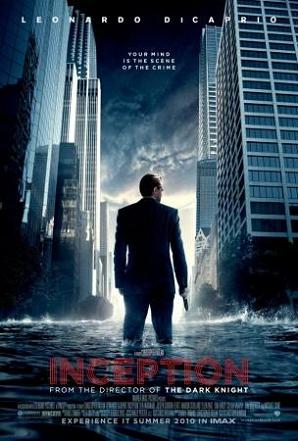
"Inception" (2010) - Movie Review

Proclaiming that I understood iotas of plot points with myriad details of “Inception” is cheating Christopher Nolan’s goal out here. He wants his viewers to revisit this feature often to completely get to the labyrinth of this story. And please find a review for this film that does not use the word “labyrinth”. Nolan appears to have been fantasized by the puzzle of the puzzle. Forming a puzzle might be comparatively easy and solving it might be easy too for the author but explaining the process to others should have completed “Inception”. Welcome to one of the best films of this year.

Let me not explain the film. Let me not explain the plots. I shunned away from the possibilities of accidentally discovering the plot or stumbling through a scene and wipe that pleasure of experiencing this film in its virgin state. Granted that it is the best way to enjoy this to its fullest potential but if you have seen out of curiosity, trust me, there is a lot more to it and I mean really, a lot more to it than you could possibly imagine in those dreams of yours.

The idea of dream, realism and the alternate reality brings sigh and deus ex machina along with it. Working on this script for almost a decade and crossing films like “Dark City”, his own “Memento” and the mother of all dream/reality/mind movies, “The Matrix” trilogy, Nolan need to fight all those in this film. But he does not see those as competition or even challenge. He simply puts his trust on his script and does not appear to work under the attempt to impress any one but himself.

I will dive through the story as I have to talk more about it. There is this concept of building your dream, sharing your dream, manipulating your dream and doing several different things with it. The technology of it is there and how of it is insignificant. The real how is the how these things fit in the plot of the film. There is a crash course in this real imaginary world. One goes into sleep and begin dreaming. The dream though is very clear as it will be for the moment of it. Nothing is glossy and everything is the manifestation of your mind. The people in it, the buildings, cars are all something from memory and most from imagination. Cob (Leonardo Di Caprio) is a thief working with reliable partner Arthur (Joseph Gordon-Levitt). They want to unlock the secrecy from Siato (Ken Watanabe) in one of their corporate espionage works and in that we learn some principles of this process. They can enter someone else’s dream and then snoop around while they believe in their dream. There can only be chaos and ugliness in one’s dream but out here it is unperturbed. It though breaks apart when they realize the dream. Keeping it intact comes from skilled workers like Cob and Arthur. Here they not alone put one through the sleep part and intrude their dream but recreate layers of it to extract information. Every one of those temporary real world fantasies have a safe with the secrets these thieves hunt for. But this is just for starters and we get into time variation and the relativity between reality, dream and the dream within the dream with fascination one has to see.

Then we learn a bit more when Siato offers that one last job for Cob’s ticket back to home to his children where he is been accused of a crime. In the process of recruiting his team, we learn some more when he explains this convoluted yet intriguing scientific theories in application to Ariadne (Ellen Page). And we keep on learning new terminologies and bombarded with information that might in any other film would shift the confusometer gauge to red zone in both of our eyes. Yet Nolan’s clarity is crystal and he knows the limitations and the expansions. Everything is a plot device, a tool to operate his screenplay not with precision but with pure ingenuity. Yes, ingenuity cannot be more appropriate to use it out here. There is a constant fascination throughout the film on this vision of this extraordinary director who has literally worked his way through from the scratch. Even in his debut feature “Following” it appears to be unpolished but the storytelling never takes it for granted or succumbs to its complacency of such a unique plot. “Inception” is much more polished and the complacency is still absent. It has such a confidence and there is this praise for itself with a modesty. It is not cockiness but Nolan appear to be a man who admires the beauty and possibilities of his mind and gets fascinated without narcism.

“Inception” in a very broadened dumbed down format of film making can simply be called as an entertainer with full of thrills and a story to move forward with pace you would not have imagined. And it is more than anything intelligent. An intelligence which challenges its audience and even commands to obey because sometimes disciplining is the best way to introduce someone for great appreciation.

The dream world of the film is clear and is modern. Sure it is not the clear form of dream. Another film of such same procedure of diving into a mind visually was “The Cell” and the director of that film Tarsem Singh used it as a tool to paint his imagination and at the same time gave pathos of human mind in disturbing nature. Nolan does not want to use this as a painting board rather use it for his construction of the most complex but well defined building. His dream world is very real and has an industrial feel to it. It is true in every sense but he wants to keep the option of fantasy out there in bending and breaking the rules of physics in his mastered path.

In a film like this where the screenplay and story might put its audience in trouble for stretching their brain muscles, I can only imagine the pain Nolan had to go through in explaining, convincing and arranging his players, studio and whoever one could think of in line to its success. That does not mean in a little bit how much the actors in this film make it easy and believe in this sequences of events. Leonardo Di Caprio is at the age and wisdom of an actor who can carry a character like Cob with experience, trauma, pain, suffering and angst with such an ease. He has to convince those things in a world barely the audience are exposed to within few minutes entering into the story. He gets commanding support from his colleagues in Joseph Gordon-Levitt, Ellen Page, Tom Hardy, Ken Watanabe, Dileep Rao, Cicillian Murphy and Marion Cotillard.

“Inception” is the first film I would call it as this complete film in not alone in satisfaction of a good film making but as a triumphant film in covering genres without wanting to cover those. It leaves a deep sense of its very philosophy of an idea rooting in its audience. By now the reader would have sensed a bias and I do not blame them for thinking so because I entered with high expectation. I did make some effort in making myself love this film and when a film has twist and deus ex machina written all over it, I would not deny that I was scared of this film touching the boundaries of disappointment. Then around midway of the film I could not stop but admire putting together this film with plethora of definitions and creativity. Somewhere before the end wherein there is this great possibility of mind blowing revelation, I told myself, I do not care if it has a disappointing end because this is brilliance in display and I have relished to call it not good but great. I might not be able to explain everything that happens in “Inception” but the feeling has been real in this dreamy world of Christopher Nolan.

Sunday, July 11, 2010

"Despicable Me" (2010) - Movie Review

Comedy of appearance used to be half the battle in animation films and now with the stories and high energy CGI taking precedence, it has become unnoticeable. While the appearance of our favourite cartoon characters brought laughs, the human mind gets seasoned and becomes used to it expecting more than physicality of it. “Despicable Me” brings out these ridiculously funny minions which by every sight of it pulls out the laugh from its audience. It accomplishes the victory of that half of the battle. The remaining comes through some good laughs, adorable animated kids and Steve Carell doing an intriguing Spanish accent to take the team home safe and sound.

It is time for the villains to be noticed and grow a heart. Thus comes Gru (voice of Steve Carell), a middle aged moderately popular villain trying to achieve his stardom back in the scene for the crowd beckoning some bad dudes. He has tried hard enough to be a jerk. His introduction with Pharell’s titular song with a series of toned and mastered jerk behaviour from Gru puts the film on course.

Gru had a decently successful career of being the bad man. His conquests includes stealing of JumboTron from Times Square. His family includes a mother (voice of Julie Andrews) who does not forget to call him and mock and a trustworthy but aging Dr. Nefario (voice of Jason Segel) making gadgets and plans for him and the aforementioned laugh out loud funny hundred or more thousands minions.

Directors Pierre Coffin and Chris Renaud have not alone used the voices of the actors but make them sweat a little to create some characteristics out of it. In animation films star studded voices have been the trend and most of the times I have the tendency to attribute the actor’s characteristic into their animated characters. “Despicable Me” might be one of the few wherein I left it out and began seeing the images instead of associating those with the voices.

Gru’s status of being the villain of a generation is questioned by a nerdy annoying little villain calling himself Vector (voice of Jason Segel). Vector has pulled off a greatest heist to challenge Gru. He simply lifted off one of the pyramids. Gru not alone has to do something about it but do big. And he wants to go all in and reach the moon. That is exactly he sets out to do. Two things to happen. Get the shrinking machine and go to moon. Then you do the math.

In the midst of this, there are three little girls from orphanage with one of those horrible caretakers. Kristin Wiig takes the honour of voicing that witch. Vector as much as annoying he can be is in reality darn good in securing his crib and thus Gru sees these kids successfully entering the premise of his for selling cookies. Eureka moments light up our man and hence comes the redemption for this despiteful character.

The math on this is very simple, the insolent rooted villain of ours has to come to realize that being nice to people brings more happiness than he really thought of. How easily these animation films get by without much explanation about the history of their central character to be bad or good? Here Gru has a terrible uninspiring mocking mother and his only success becomes in being a hateful person. I guess it is this convenience which brings wide variety of people to have some neat healthy fun.

Gru and the kids eventually becomes great buddies and there is a ritual ending which we do not mind about. The only let down is that the potential “Despicable Me” created itself in its first two acts raised itself high enough for more inspirational stuff in the third act. Not because of laziness or compromise but purely of some creative muscle being relaxed puts this otherwise entertaining film into a likable flick than to the statuses of “Ratatouille”, “Wall-E” and “Up”.

Saturday, July 10, 2010

"The Limey" (1999) - Movie Review

There is not alone a method to madness in the film making of Steven Soderbergh but a rhythm so unique that telling it aloud about it might sound ridiculous. Soderbergh in “The Limey” brings a foreigner to the stranger land of Los Angeles and lets him speak his thick cockney accent when it is necessary for a sufficiently long time. It becomes comic and an element to the story. Editing by Sarah Flack becomes a crucial factor in the way of film making Soderbergh sets to do. The story is simple, old hard Wilson (Terence Stamp) is from UK and now is in Los Angeles to investigate and avenge the death of his estranged daughter Jenny (Melissa George).

This neo-noir story is nothing but the philosophy of movie making Soderbergh takes up. A man with everything lost has nothing to lose and that holds on right seeing Wilson go about at every one potential enough to lead to the end. The determination is evident and he does not seem like a calm fella but he is and he is not when the time requires it. Terence Stamp has a required face for Wilson to be ruthless and merciless. Even his soft side towards daughter’s acting class friend Elaine (Lesley Ann Warren) comes with a shade of doubt.

He gets friends and he gets by. He has not been a great father. When you are a career criminal, there is not much time you have got outside and his came a while back to make her run away to Los Angeles. After being released from prison, his sadness is deepened and now nothing much is left than to avenge the death of her. The situation is dubious with her sleeping in a car and henceforth crashing it. She is not like him in the territory of being irresponsible. Something is wrong.

He eventually finds the man responsible, Terry Valentine (Peter Fonda). A typical tanned and perfectly combed sleazy record producer is already onto Jenny’s replacement girl friend (Amelia Heinle). He has a trusty obese bodyguard and a right hand man Avery (Barry Newman) and who from the looks of it is out there to do the dirty work for Terry. The smile of Terry is obnoxious. It reeks of mistrust and immediate irritation to punch him for it. Yet there is something magnetic about him to reasonably believe these two beautiful young women falling for him.

It is all about style and it is all about Soderbergh using it with great effectivity. There are flash backs and sounds of other scenes used in it and in the current circumstances. Future events come forth and the sounds of it interlace. In these supposed visual disarray there are no distractions. It is clear as it can be and effective as it should be. Instead of becoming a regular revenge noir story, it turns out to be a skillful execution of a passionate director’s novel idea.

Terence Stamp as such has a vicious and powerful presence. He can be good and can be bad. His roles are such that so far I have seen him in films and in “The Limey” it helps. His softness seems to suggestive and his anger the same. Except for a bloody face after a shoot out and eyes popping out for payback, Stamp’s Wilson is the walk, attire and presence. His moves to attack his enemies are basic but lethal.

I liked “The Limey” for more than the visuals and characters. It has emotions hidden with bread crumbs laid down in the hazy memory of this old man. His closure is not discussed but learned and his deadliness in getting things done is, well, you will see it. He does not blink and does not react for a man of this nature. He keeps it contained and explodes with a proper perimeter. This quality is not predictable but beautiful to watch.

To see a director grow and realize his works are marks of a great one is a pleasure to follow. Unfortunately I did not get to see many of it except for maybe David Fincher and Christopher Nolan. Making “The Limey”, he already made a mark with successful ventures of his and in this entered a realm of new possibilities in genres not limiting him. Now he has made several films with success to some near misses. His last films “The Girlfriend Experience” and “Che” have attained great status in my lists of film and while “The Limey” is not the greatest, it is definitely a Soderbergh-uesque experience to be enjoyed.

"TiMER" (2009) - Movie Review

Oona is played by Emma Caulfield with some confident sheer characterization of being an absolute insolent soul seeking terror (I might have provided a better single word but well, let us not put it out here) which gets to you immediately. But to her fairness the species we are comes as an attention seeking and approval seeking kind. It is more substantiated by the presence of a partner. That has been our instinct, our nature and the only possible purpose I could think for an existence beyond my beliefs.

“TiMER” works with a beautiful premise, an instrument to identify your soulmate. Put it on and the counter begins and zeroes out when you meet them. It comes as blanks as it has been for Oona from the age of fifteen. That means that your soulmate did not got himself/herself a timer. Her step sister Steph (Michelle Borth) has a sufficiently long timer, a really long one where she has to wait till 43 (if wiki is right in its description). She begins to live life by sleeping with random strangers with a timer. One way to have a revenge against the machine that had delayed her love life.

The premise also is definite. It has 98% of satisfied clients as they say which is darn close to be perfect. How it works is not the question but the idea to formulate this screenplay for writer/director Jac Schaeffer works well. And here is a director who is not ready to compromise and not provide a sweet journey to leave the theater with the regular churn of manufactured endings. It is content in a way though. Most of the surprises, plot points are predictable and it is out there to be cracked. The point though is to have this thought of giving yourself the slack to not be probable about you sharing your life with someone but be absolutely positive on it.

The film is not alone about the sorry situation of Oona but the people around her. While we are startled by the way Oona drags her date immediately to the Timer providing company, we learn her roots when we meet her mother (JoBeth Williams). Her mother has been a firm believer and bit of fanatic towards this invention. She rightfully placed those to her daughter and step daughter and now it is time for her son entering 9th grade and to the vicious expectation of pressure into this world of finding the partner.

For most people, when the physical need gets usual and the underlying truth of being noticed, addressed and attended surfaces, it becomes essential to have that guarantee. Timer provides that and there appears to be nothing wrong about it. It questions the free will concept but lets look at the broadened picture. When the experiment stands the test of time, it qualifies to choose the path. Obsession over it becomes the character question for Oona. She and Steph are best friends and roommates finding solace in this definite problem of indefinite disappointment. For Steph, the wait is boring though she knows it while for Oona, it is the unknown that torments her.

Within ten minutes into the story, we understand the need for her to break free and take up the decision Steph has for a while now in action. She meets a fairly young, skinny nice guy Mikey (John Patrick Amedori). Mikey has a timer with four months till he will meet his match but finds Oona attractive and “cool”. Oona takes up the one night stand and then some as they eventually and predictably fall in love. No one comes out and say it or even realize it till the moment vanishes. Strange thing about love.

I was initially disappointed when the film used background scores and soft music to provide montage of good times to show two people falling in love. Then as the film came to the juncture of deciding where to go and did the right thing, I understood the need for undermining those moments into unknown memories than to remember them for skillful dialogues.

You will not be surprised with the “TiMER” for most part. It eases into its genre quite well and becomes a living thing you come to not mind. You are ready for the disaster of the happy ending but then it arrives at it rightfully though not radically as one might think. It does not cheat its screenplay. It is not daring but seems that is how it will be when this ridiculous presumptuous system of picking your love comes into existence. Hey, at least there will be some hope for everyone. The end might not be likable but it drives you there with some curiosity. Whether it drives you mad with obsession like Oona is a different story.

Monday, July 05, 2010

"The Seventh Seal" (Language - Swedish) (1957) - Movie Review

The poetry of the film begins with the very first frame of the “The Seventh Seal”, a sleeping knight Antonius Block (Max von Sydow) beside a chess board arranged to begin the play, two horses on the shore and the scary face of Death (Bengt Ekerot). This is not as magnificent and sweet as “Wild Strawberries” but it relentlessly shares the superior quality of it which is the wisdom. Ingmar Bergman takes death in this game of life and does not think twice about bringing it in every inch in his film. You will have answer and you will think it is obvious but it had to be this way. The journey is important as that is what makes sense of our end.

The knight is not afraid of death because he has always expected it in from all corners during his ten years of crusade. His compatriot as his squire Jons (Gunnar Björnstrand) is full of smart remarks with full of truth and ironic nature to it. He knows his master’s undying question because he has those himself and he has found a better way to deal with it, to not worry himself to death. Antonius cannot rest it and now more than ever when Death has come to bargain his life in a game of chess, the time is running out and he cannot die in peace with the idea of unknown enigmatic questionable power.

As they head back home from a very regretful ten years of war, pain and brutality, Antonius and Jons are not the same people they left. They are tired of everything and their prolonged existence only keeps the torment going in finding reasons for that. In these lone men and in their desperation are some colourful characters in the name of traveling entertainers. A lovely couple Jof (Nils Poppe) and Mia (Bibi Andersson) with their baby Mikael. Jof sees visions which are as true as Antonius’ visualization of Death. He sees pleasant things though. Along with their prick of a head of the troupe, they go to their next village for performance. While they are ready to do that, Antonius and Jons see a church and a group of soldiers ready to burn an innocent child said to be possessed of devil. In between there is a plague on the outbreak. Among these travels Antonius hoping to find something of an answer before he loses the game.

Bergman in this film goes a little Tarkovsky and this can be purely personal. May be it is due to the uneven silence that exists between solid dialogues. Boring as it might be, Tarkovsky’s film have this eerie silence which is disturbing, annoying and has a devilish soul to itself and Bergman has it out here. Given that Tarkovsky begun making films after Bergman, he concentrated on this atmosphere more than Bergman himself. In this film it becomes the bleakness of those surpassing slow end of events itself.

The never answerable question towards the existence of god cannot be more simply put from this character. He has fought in the crusade sacrificing himself to the service of this made destiny to regain the possession of holy land and has seen/done unspeakable things. He has accepted death as his only redemption but for once he wants to know whether what he gave is something really out there. Not in the name of Jesus or definite figure but to quench his thirst for fallen questions. He wants to believe but the deed and living he has done made him unable to embrace the belief. The feeling to be nothing but a speck in this big universe bothers immensely as it does every one of ourselves.

But equivalent to Antonius is his squire Jons lived through the same and has undergone a cynical carelessness. He is so clear of the right and wrong but knows what can be done and what cannot be done or what he chooses not to do. He has learned everything but there are unjust things which even he cannot close his eyes away from and go about the imbalance of the nature. In between these desolate and lost characters are hopes and cheers from Jof and Mia with their baby. There is a moment of happiness in all of them when chance get them together to have strawberries and milk. There Antonius almost answers his questions with the reality of these bonds, friendship and simple food of pleasure to complete his life. Yet he wants that to become it as a memory than a life lesson.

While I said that this is not as great as “Wild Strawberries”, the mood of this might have played against it. Its weariness and darkness absorbs the energy to itself and creates the much talked about emptiness of life. Though it succeeds in embodying the theme of the film, it does detriment the film making clarity Bergman brought in the aforementioned film. Then again, this is a film of precise dialogues with ambiguous answers. There are several instances of ludicrous behaviour in the name of belief and then there are reasonable instances to believe in the god. But when the end nears, every one bows to the ultimate power and nature. That I will leave it upto you to find out watching “The Seventh Seal”.

Saturday, June 26, 2010

"Flirting with Disaster" (1996) - Movie Review

Knowing a neurotic freaky person is different from seeing one. Seeing several of those is different from seeing one. The modern day life style for perfection, overflowing information and more than needed psychoanalysis has given birth to the true breed of dysfunctional family. In olden days, there was an order in this set problems of family but now the balance has been achieved and the chaos has henceforth in full fledged process. “Flirting with Disaster” witnesses many of those people we begin to care but crowds it up and we not really care about them anymore.

Mel Koplin (Ben Stiller), a new father aspiring to counteract this role in finding his biological parents. Do you know that feeling inside you which urges all the crazy cells in your body to go for something when you damn well know that the end result might not be what you are hoping for? Mel has taken a solid potion of it when the movie begins. His wife Nancy is played by Patricia Arquette, yes that blonde seductive and dangerous beauty plays her like a typical fresh mother. Not because of her edgy attitude but because of the way she lets her body flow unaware or not caring to be precise. Saying this might be the easiest judgment and conclusion I would have had but letting your body to go through such naked and explicit makes a woman free herself of the surroundings looking at her, at least for a while. And Arquette along with director David O. Russell makes that a point in their Nancy.

Mel has every one and everything going against him. The new baby without a name, his adopted parents Ed (George Segal) and Pearl (Mary Tyler Moore) going expectedly bonkers on him for his expedition and the tense and vulnerable adoption agency worker Tina (Tea Leoni) drive him through the air, road and inside of his brain. Mel is no clear minded himself. His need to find his roots after these years is a substitute for his fresh and blossoming problem of parenting. Nancy is supportive though is being slowly pushed to the boundaries of being annoyed and used.

“Flirting with Disaster” knows these people on the sledge and brings them one at a time. Seeing them do their things brings smiles out of the misery Mel is been put through. Mel and Nancy fly with Tina to San Diego to the mother (Celia Weston). They meet her and she is a nice enough woman embracing her son she gave away. They begin to share the commonality and the obligations to reflect the hereditary practices gets flowing. Soon it is realized that the woman is not really his mother and the computer did a mistake. Those damn machines of 90s. They always do that. Surviving the greatest awkward moment, they begin to travel towards Michigan to the supposed dad. You know where it is going from there on. May be but the idea is barge in these characters from varied places and put them to the mix in the pathetic situation of Mel and Nancy, and yes Tina too.

Everything goes fun and frolic and absorbing some sumptuous pleasure in these people’s pain. And David O. Russell wants more. He gets all the interesting characters we met in the first hour of the film and takes them to one spot where Mel’s actual and confirmed real parents are, (Alan Alda and Lily Tomlin). A bad choice indeed and they champion that mistake till the credits. A film which smells so much abundance of independent movie making inviting good stars in this flick loses all its ticklish but real sense of comedy and pain with thorough rinse of out of the roof chaos.

There is Richard Jenkins, Josh Brolin, Alan Alda and other talented names bringing riveting craziness to their American characters. Richard Jenkins and Josh Brolin on his early play this two cops that seemingly become increasingly a parallel to the married Nancy and Mel. Do not you just hate it when a film lets you down raising itself high and high and then finally not particularly shatter into pieces but simply fizzling it in the aim of achieving beyond borders of limitations? Well if you do not know, you will probably find it in “Flirting with Disaster”.

Friday, June 18, 2010

"Hunger" (2008) - Movie Classic

You do not need to take a stand, side with the IRA or hate it or be neutral. You do not need to be sympathetic or hateful towards the cause. You do not have to know much of Bobby Sands played with a brutality and dangerous grit by Michael Fassbender. You do not have to like what he does, the perils he puts through and others in the name of the belief he bores. You do not have to look for meaning, poetry or sight for redemption in Steve McQueen’s “Hunger”. You just have to watch it because a movie like this comes once in a long time and it damn well deserves the attention regardless of what you think of anything.

It follows the final days of Bobby Sands in his 1981 hunger strike in Maze prison. Before deciding to go for the hunger strike, he and his fellow prisoners were on “no wash” strike. A new prisoner enters as room mate to Bobby Sands whose walls are pasted with feces and the man himself is covered in hair. In the long narrow corridors carrying these prison rooms becomes an arena for flooding urine from their cells, getting beaten by the prison officers and get smashed over the brick walls in the process. These are few of the violence. The real violence comes in the form self consuming putting them into the worst test of their body and mind.

Dialogues are sparse except a spellbinding 17 minute single shot scene between Bobby Sands and his priest (Liam Cunningham) which is the only time we hear his philosophies, explanation, determination, stubborn and the little left comedy in his destructing body. The length is there to not perturb the moment. The serenity of that scene has to be intact through the clouds of cigarette smokes. As though McQueen and the actors were containing a cracking glass of water, they hold it closely and tightly. It is not to show they can do it but to maintain the stillness and the aggressiveness in the conversation. It is the pivotal scene to put its viewers through the course of this man’s extreme belief for the rest of the film.

There needs a mind shuddering incident for people to act together. Emotional upheaval from mass of people comes forth of witnessing utter brutality. Sands chooses to do it to himself and feels so right about his decision to keep his course till his brain has shrunken enough to hallucinate and pass out of pain. The film is carefully constructed wherein the only talk between the prisoners and the officers are the slamming of those police sticks on their naked body. It is a one way talk from the officers by the way.

It is an obvious question to search for the reason to go in the details of this torture the protagonist put himself through. The reason is clear for the individual but not for the audience. We are not here to judge his decision or the sanity of it but to see there is something beyond the tale. There is a migration of those terrible violence and self destruction coming outside of the screen. It reaches out inside us to not alone disgust on this raw nature of pain but to realize that there is a pain which cannot be comprehended. The characters are not alone pitiful which they do not expect but there is something in the air along with their protest on contaminating it with their feces.

“Hunger” is not a pleasant film if you have not figured it by now. It has immense violence, very affecting in nature but it is also a film defining the extremities of human vigour in carrying out something. It is given like an impossible mountain climbing and the hardship to attain the peak. In most of these stunts for achievement, the trick is to come back alive while Bobby Sands knows where this road is going and that is indeed his peak. He has the set mind of a suicide bomber and the difference is that he is taking himself alone. Though he persuades his fellow prisoners to do the hunger strike along with him spanning it in gaps to counter for the death in the process. 9 more members died after him.

The scenes are extended from your normal attention span the Hollywood has dumbed down to. In the corridor after the urination protest, a guard cleans the floor. He splashes the detergent/disinfectant liquid throughout the corridor. Then he goes and begins cleaning it pushing it with the scrubbing floor brush. We see him do the entire floor and that particular part appeals to you on unexplainable levels. Is it a metaphor? Is it symbolism? It is nothing but a man cleaning the excreted human waste, yet there is more humanism and inhumanity in it. You will know what I mean when you see it.

“Hunger” is beyond the visual emotional drama and is Fassbender’s dangerous dedication to his character. In the final scenes of the known demise of his character, his body is nothing but degraded bones, his skins are nothing but sores and his mind is nothing but unfathomable determination. I cannot admire the hunger strike nor degrade it to the stupidity. It birthed igniting other people to enlist in the cause which again resulted in more violence. But this is not about the right and wrong of a belief. It is about a man caught up in it and ready to go all in slowly, surely, sacredly and stupidly in his own way. This is more than a visual dark poetry. This is the extremity of a human body and the limitlessness of the mind over it.

Sunday, June 13, 2010

"Forgiven" (2006) - Movie Review

The indie film “Forgiven” is a good project film for writer/director/actor Paul Fitzegerald and it is a compliment. He has a tough story to say and have some brilliant unknown actors at his service. Every one delivers and the movie is a good film but does not entirely provides the effect of drama it began to venture. It is a sad story and a conflicting one too. In this considerably short feature film, it has a mood, ambience and people to be dissected but there is a layer which is missing. The layer of complete emotional closure. It does not play like a short story or a film which depends on the mood which throws it into the category of good try but no cigar.

District Attorney Peter Miles (Paul Fitzegerald) is the all American man in the town of Stuartsville. Sharp, clean, articulate and a natural charisma poses him as the ideal candidate for US Senate position. With wife Kate (Susan Floyd) and son Jake (Cooper Agar), job to do and a bible study to attend, he has everything going fine in his life. For death row inmate Ronald Bradler (Russell Hornsby) the man Peter convicted several years ago, it does not look good. His Attorney Jamie (Kate Jennings Grant) has given up hopes along with him and they are ready to put him to sleep. In the final moments, the call comes from the Governor to pardon him. He is free and Peter gets questions from every one. He is convinced Ronald is guilty while Ronald appears like a man in the wrong time and place.

There is no detailed mention of the crime other than a murder of a cop. Ronald has been inside the walls for several years to pound himself on the unfortunate events of his life. He is out and he has tough time adjusting to the unfairness of the system. He has been exonerated and yet he gets treated like a convict. His previous employer promised a job which he backed off. He is angry at the system and mainly the man who put him through this. Peter apart from dodging questions is questioning himself on the race card being used on his appeal for death penalty on three of his cases. All these runs fine and impressive in dealing it with a care than a melodrama.

Ronald’s pain is real and we along with others are startled on his disregard for the second chance he got. The reality is that we see him as a convict too. There is no necessity to explain his innocence but there is a space between his exoneration and his mistake of an act which goes vague and substantial enough. Having said that, the actor playing Ronald is nothing short of brilliant. Russell Hornsby gets the note so perfect with this man struggling inside and questioning the conscience and the system he is in. Even when the film does not do a terrific job of him doing the unthinkable in the end, he makes it believe it. He gives Ronald as this seriously disturbed man by the turn of events he did not start.

“Forgiven” touches on various topics to ponder. Death penalty, justice system and the existence of right and wrong. As the film spins out slowly to the tragedy we are now sure of, there is a new revelation which makes it even stronger on a definite loss. In the midst of the people choosing their decisions and acting on emotions, the people surrounding them are the absolute victim and in the case of Ronald and Peter it becomes their family in a very direct manner. Both men are tilted by a moment’s choice and live with it.

I did like “Forgiven” for the most part because it is a well done film and a film handling itself with the maturity and professionalism where most of the budding indie film misses. It was breath of fresh air to see this area of film industry taking things a little more public and large than simple family drama. It puts the topics on the table for the public debate and forks through the controversy in our daily life. Paul Fitzegerald is definitely an able film maker and an actor. Out here he is good but he can be really good which will be what I will be expecting in his next film.