Saturday, July 24, 2010

"Mumbai Meri Jaan" (Language - Hindi) (2008) - Movie Review

“Mumbai Meri Jaan” is the only good sign I have seen in a very long time wherein great films from Hollywood are taken as an inspiration than a shameless act of plagiarism. For once there are people rather than heroes and there are characters than villains. In real life every one of us play different characters based on instincts, situation and the belief one holds. Directed by Nishikant Kamat, this film has people living their life as it is when terror strikes. It is not the operation but the post operation which is the real test of sustaining hell and the question of existence after it.

Nishikant Kamat though gets a little too long in the end to arrive his proper and deserving destination but has stories which are told with simplicity and a moral pendulum which often gets missed, dismissed and compromised in day to day encounters. Here we have distinct people in this vibrant city. There are peculiarity to their characters in small amounts which gets disturbed in some cases and amplified in others.

Tukaram Patil (Paresh Rawal) is hitting the age to retire from the most hated and despised job the public sheds its eyes on, being the police. Then there is Suresh (Kay Kay Menon), a computer business person having a good solid subtle hatred for Muslims which gets its complete form by the bomb blasts. Irfan Khan plays a nameless Tamilian being harassed by the people of Mumbai in one form or other and gets his say. Nikhil (R. Madhavan) is an idealistic well to do working man and he prefers to be environmentally conscious and be good to his country. He religiously rides the heart beat of the Mumbai, the train and gets shaken when the beat skips to cause a deadly tragedy. Finally is Rupali (Soha Ali Khan), a direct victim of the tragedy losing her fiance Ajay (Sameer Dharmadhikari) and she has been up close in the ugly journalism India has adopted from the fear inducing US media.

Most of them go through the fear and come out infected. People like Tukya see it as a regular part of their life. He has lived through several of these in his thirty-six years of police life while his young protege Kadam (Vijay Maurya) feel emasculated of not being able to catch the perpetrators and live through being mocked by the public. He gives it back with slaps and curses whenever he pleases. He accepts bribes with a cushion consolation from Tukya while looking at what he will eventually become in thirty-six years.

Before the blast every one are in a particular juncture of opinion or phase in their existence. Though Irfan Khan’s character is as many bystanders is a simple poor guy looking for a way to make his family run with meager amount of his mobile tea stall. He stands there as a witness to Suresh’s groundless anger towards Tukya and Kadam and then being punished for being there. He goes to mall and wants to get a whiff of a perfume that would cost his entire year of hard work. He takes his small family and being doing this for a while gets him in trouble. This creates a general anger towards the people, the middle class wealthy ones of Mumbai to be despised by him. He sets off to do a prank which dangerously results in people’s inconvenience. His story is a genuine short story going with a life of its own.

A friend of Nikhil from US conveys how the next generation will be used to terms of bombs, chaos and riots unlike the current one but the fruit has been conceived well and has ripened in this generation. Bomb blasts in India has become the addendum for riots. It is too bad on the way we settle out these things far away and keep ourselves in the four walls. So is life and we do what we can but the impact of such an event mars permanently. It does to Nikhil, Suresh and Rupali directly being there while Tukya, Kadam and the innocent tea stall guy feel the ripple. The ripple is very near to its epicenter in “Mumbai Meri Jaan”.

“Mumbai Meri Jaan” uses the intertwining storytelling of “Amorros Perros” and mainly “Crash”. The great thing about the film is it takes the technique for a complex and existing pathos of the people in Mumbai. Suresh suspects the Muslim regular Yusuf in his hangout to be a terrorist suspect and begins to investigate. From the details of Yusuf’s disappearance and timing, it makes sense of him being the culprit but so will be Suresh. Nikhil cannot ride a train like before as the life threat has intruded in his common space. Rupali gets a cruel rude shock of what she has been doing in the name of journalism and news. She is put in the podium and understands the lengths to which the current media makes an ugly spectacle of misery. Tukya has conveniently lived through being docile and immobile. He has accepted the life of police person in collecting briberies but not the one he took oath for. The nameless tea stall guy just lives through it and learns a bit of wrongdoing can go a long way. All of them learn a lesson but whether they follow through is within its audience. We are who they are.

Tuesday, July 20, 2010

"An Unfinished Life" (2005) - Movie Review

There is an effortlessness in the smoothness of “An Unfinished Life” and in the acting of Robert Redford and Morgan Freeman that makes it something of a simple predictable story into a simple story. It follows the classic formula of reconciliation with the lost relationships but it does it effective without shudder and emphasis. Lasse Hallstrom has the cast to do that job of easing into the comfortability of the story and then let the surroundings of supposed Wyoming (though everything was shot in Canada) to do the rest.

Jennifer Lopez plays single mother Jean and is running away from an abusive boyfriend Gary (Damien Lewis) with her daughter Griff (Becca Gardner). In the small luscious green town of Wyoming is Einar (Robert Redford) with his long time injured friend Mitch (Morgan Freeman). A year ago Mitch got mauled by a bear and it is back in town. Before Einar could get his say for his friend’s misery, it gets captured and put in a local zoo. Mitch has a strange feeling towards the bear. Einar has the same towards Jean, his dead son’s wife. Jean was the driver when the tragedy happened and has hidden the fact of having a grand daughter and grand father from each of them. With nowhere to go, she lives at the mercy of Einar who has nothing but unforgiving spite for taking away his son forever.

The tradition of broken relationship glued by the generation next is as mentioned traditional. Out here there is a calmness in story telling and does not take the melodrama of it to sweat. Redford’s Einar has some lonely mumbling moments with his dead son and Morgan Freeman has his wise smart words as he always does. How can he speak up such simple life lessons and adds a gravity to it that the only thing left is to listen and follow it? Even if it is going to be someone like the hard nut Einar.

In this town where every one wishes every one and knows them by first name, there buries a deep story within for each of them. In the waitresses like Nina (Camryn Manheim) who not alone knows Einar but knows his emotions and the simple comic nature of the doctor and Einar there exists a soulful town. There are plot pushers like Crane (Josh Lucas) to get Jennifer Lopez’s Jean a pair and there is the regular waitress Nina in the town for support in between these lost characters. Nothing much appears to be there in this place and there is a question of the life Einar has been leading. It is nothing but pure regret, hate and grief. It only reached its height with his dear friend Mitch getting crippled and him being helpless.

Lopez is an odd choice but she fits the bill. Not too much to extract herself out in the emotional frontier. Her Jean has been the good looking gal and has been surviving clinging on to these boyfriends she settles for. She has put up with Gary and now has to put up with Einar. She has not talked or seen him since her husband’s funeral and she prefers him over somewhere else. She comes by and get the Sheriff Crane for multiple purposes. Getting away from loneliness has driven right to Gary but now she has to think sane, at least for the sake Griff.

Griff is getting there to grow up and learn the truth about the adults. There is nothing but deceit and sorrow. And in Einar she sees more of it. Einar gets some wise standard talks from Freeman’s Mitch and begins his road to redemption and meaning. It begins with bonding with his grand daughter. Simple things makes this piece of normalcy into something better than good. Gary as the trend of angry boyfriends goes visits the town and with the new guardian Einar, he gets the treatment to get off the town. Crane comes by and does his part in the way that these kind of films might settle for fist fights. Crane comes inside his vehicle with drenched Einar. Einar asks if it is ok to not talk about this at all and Crane abides. Moments like those makes “An Unfinished Life” a story knowing what it deals with and mainly the people it brings out. These are people who lead simple life with straight minds and has always lie with wounds to lick.

Lasse Halstrom does not provide something new but polishes an old story with some good story telling and cast that delivers what they were recruited for. There are predictable moments of possible tragedies and the escapes of it but it always has a reason and slides in those like a perfect tightening of a new pair of screw and a bolt. “An Unfinished Life” will always lead a smile and care from its audience, even in its slightly overdone melodramatic moments.

Monday, July 19, 2010

"North Face" (Language - German) (2008) - Movie Review

There is a decision of death of a fellow climber or destination to that tempting summit in “North Face”. Every one knows the answer but only one says it aloud. That is Toni Kurz (Benno Furman), one of four climbers of Eiger mountain’s north face. His climbing partner and friend Andreas Hinterstoisser (Florian Lukas) looks at him with a relief and anger for the truth told at that moment. The other two climbers are competition Austrian team Willy Angerer (Simon Schwarz) and Edi Rainer (Georg Friedrich). Willy is haunted and drugged by the vigour to get to the summit that halfway when he is badly hurt and Edi suggests to go down, he threatens to kill him. When another terrible incident hurts Willy worse than the head injury, these two teams has to work together in descending. That is only the beginning of the terror in this film based on a true story, “North Face”.

In 1936 Austria is on the verge of eventual annexation with German Nazi’s while Andi and Toni are more interested in climbing mountains. Andi is the older of the two and wise in the looks and actions. Two climbers already died in the attempt of Eiger and now the newspaper needs a story to detail the conquest by either a Germany team or an Austrian team supporting the Nazi annexation. Either of their win will be a triumph for the senior reporter Henry Arau (Ulrich Tukur). Arau got the office secretary Luise (Johanna Wokalek), the childhood friend of Andi and more than a friend for Toni on the story as a photographer. Luise and Toni have long gone in distance and waiting for that first move from either of those for a rekindling of their relationship. “North Face” is not about that of course.

Even before they set out for the venture of this dangerous feat, they camp at the foothills of the Eiger. Arau has brought Luise so that she can be his protege. Arau is a serious reporter hunting like a fox for a story. He is not cunning but has a blunt mind and unmerciful outlook on this situation. For him this is a story and it is purely a story. The outcome has to be either happy or tragic to provide a story. Not a friendly retreat. Luise likes him because he opens up the career and life she cannot pursue in the time and place of Germany. Add fancy parties, drinks and four star comfort, hard fought climbing ex-boyfriend moves away far long before guilt brings her back. Toni bids adieu submitting his mountain climbing journal to Luise. He and Andi takes an unconventional route only which the Austrian team dedicatedly follows.

“North Face” blasts the snow and the icy cold wind on to its viewer’s face. The snow flows like a waterfall and the climbers are shot with some long distance aerial shot. Their zest is uncompromising and deadly. The movie shows the Eiger on different situations that it changes its face. It is peaceful, serene, brutal, cold and cruel. Every time based on the climbers’ predicament and success we are scared and fascinated by this white giant. Nature is beautiful when you are at your comforts and is the worst villain when it shows its darkness.

Philipp Stozl, the director of this film knows that certain parts of this story has to be told faithfully. If he is going to tilt and swing the angle of emotions out here, it is a disgrace and plainly sinister to manipulate it. The hatable reporter speaks out some untimely truth with an inconsiderate mind. He knows that the media needs a very successful or a sob story. He knows that smelling a story is the greatest success for a reporter and he knows that being human should be selective to be inhumanly objective in the situations that beckons empathy. He is played with a pendulum mode by Ulrich Tukur. He is kind and encouraging to Luise and at the same time spits out the venom.

But the greatest achievement in acting comes from the four actors playing the climbers. As the main man Toni in the true tragic story, Benno Furmann plays him like a hero, wise man and mainly a tired and drained human being. He initially objects of going to Eiger knowing the considerable risks involved in it and says he climbs for himself. Most of the great artists do things for themselves. The best piece of their work comes from pure selfishness. Yet again Toni is an amicable and lovely man who understands his friend’s desire which translates into his own. He abides and sets forth. As the end nears and the audience expects, Luise’s love is intertwined but not as a director looking for solace. Her braveness is not in helping Toni by doing the unthinkable heroics but by dangerously being there. “North Face” is an exhilarating experience for the intimidating mountains and snowscapes and deadly abyss but it is more about the climbers, the people, the politics and the limits and endlessness of humans.

Friday, July 16, 2010

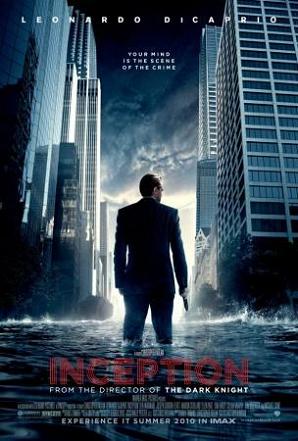
"Inception" (2010) - Movie Review

Proclaiming that I understood iotas of plot points with myriad details of “Inception” is cheating Christopher Nolan’s goal out here. He wants his viewers to revisit this feature often to completely get to the labyrinth of this story. And please find a review for this film that does not use the word “labyrinth”. Nolan appears to have been fantasized by the puzzle of the puzzle. Forming a puzzle might be comparatively easy and solving it might be easy too for the author but explaining the process to others should have completed “Inception”. Welcome to one of the best films of this year.

Let me not explain the film. Let me not explain the plots. I shunned away from the possibilities of accidentally discovering the plot or stumbling through a scene and wipe that pleasure of experiencing this film in its virgin state. Granted that it is the best way to enjoy this to its fullest potential but if you have seen out of curiosity, trust me, there is a lot more to it and I mean really, a lot more to it than you could possibly imagine in those dreams of yours.

The idea of dream, realism and the alternate reality brings sigh and deus ex machina along with it. Working on this script for almost a decade and crossing films like “Dark City”, his own “Memento” and the mother of all dream/reality/mind movies, “The Matrix” trilogy, Nolan need to fight all those in this film. But he does not see those as competition or even challenge. He simply puts his trust on his script and does not appear to work under the attempt to impress any one but himself.

I will dive through the story as I have to talk more about it. There is this concept of building your dream, sharing your dream, manipulating your dream and doing several different things with it. The technology of it is there and how of it is insignificant. The real how is the how these things fit in the plot of the film. There is a crash course in this real imaginary world. One goes into sleep and begin dreaming. The dream though is very clear as it will be for the moment of it. Nothing is glossy and everything is the manifestation of your mind. The people in it, the buildings, cars are all something from memory and most from imagination. Cob (Leonardo Di Caprio) is a thief working with reliable partner Arthur (Joseph Gordon-Levitt). They want to unlock the secrecy from Siato (Ken Watanabe) in one of their corporate espionage works and in that we learn some principles of this process. They can enter someone else’s dream and then snoop around while they believe in their dream. There can only be chaos and ugliness in one’s dream but out here it is unperturbed. It though breaks apart when they realize the dream. Keeping it intact comes from skilled workers like Cob and Arthur. Here they not alone put one through the sleep part and intrude their dream but recreate layers of it to extract information. Every one of those temporary real world fantasies have a safe with the secrets these thieves hunt for. But this is just for starters and we get into time variation and the relativity between reality, dream and the dream within the dream with fascination one has to see.

Then we learn a bit more when Siato offers that one last job for Cob’s ticket back to home to his children where he is been accused of a crime. In the process of recruiting his team, we learn some more when he explains this convoluted yet intriguing scientific theories in application to Ariadne (Ellen Page). And we keep on learning new terminologies and bombarded with information that might in any other film would shift the confusometer gauge to red zone in both of our eyes. Yet Nolan’s clarity is crystal and he knows the limitations and the expansions. Everything is a plot device, a tool to operate his screenplay not with precision but with pure ingenuity. Yes, ingenuity cannot be more appropriate to use it out here. There is a constant fascination throughout the film on this vision of this extraordinary director who has literally worked his way through from the scratch. Even in his debut feature “Following” it appears to be unpolished but the storytelling never takes it for granted or succumbs to its complacency of such a unique plot. “Inception” is much more polished and the complacency is still absent. It has such a confidence and there is this praise for itself with a modesty. It is not cockiness but Nolan appear to be a man who admires the beauty and possibilities of his mind and gets fascinated without narcism.

“Inception” in a very broadened dumbed down format of film making can simply be called as an entertainer with full of thrills and a story to move forward with pace you would not have imagined. And it is more than anything intelligent. An intelligence which challenges its audience and even commands to obey because sometimes disciplining is the best way to introduce someone for great appreciation.

The dream world of the film is clear and is modern. Sure it is not the clear form of dream. Another film of such same procedure of diving into a mind visually was “The Cell” and the director of that film Tarsem Singh used it as a tool to paint his imagination and at the same time gave pathos of human mind in disturbing nature. Nolan does not want to use this as a painting board rather use it for his construction of the most complex but well defined building. His dream world is very real and has an industrial feel to it. It is true in every sense but he wants to keep the option of fantasy out there in bending and breaking the rules of physics in his mastered path.

In a film like this where the screenplay and story might put its audience in trouble for stretching their brain muscles, I can only imagine the pain Nolan had to go through in explaining, convincing and arranging his players, studio and whoever one could think of in line to its success. That does not mean in a little bit how much the actors in this film make it easy and believe in this sequences of events. Leonardo Di Caprio is at the age and wisdom of an actor who can carry a character like Cob with experience, trauma, pain, suffering and angst with such an ease. He has to convince those things in a world barely the audience are exposed to within few minutes entering into the story. He gets commanding support from his colleagues in Joseph Gordon-Levitt, Ellen Page, Tom Hardy, Ken Watanabe, Dileep Rao, Cicillian Murphy and Marion Cotillard.

“Inception” is the first film I would call it as this complete film in not alone in satisfaction of a good film making but as a triumphant film in covering genres without wanting to cover those. It leaves a deep sense of its very philosophy of an idea rooting in its audience. By now the reader would have sensed a bias and I do not blame them for thinking so because I entered with high expectation. I did make some effort in making myself love this film and when a film has twist and deus ex machina written all over it, I would not deny that I was scared of this film touching the boundaries of disappointment. Then around midway of the film I could not stop but admire putting together this film with plethora of definitions and creativity. Somewhere before the end wherein there is this great possibility of mind blowing revelation, I told myself, I do not care if it has a disappointing end because this is brilliance in display and I have relished to call it not good but great. I might not be able to explain everything that happens in “Inception” but the feeling has been real in this dreamy world of Christopher Nolan.

Sunday, July 11, 2010

"Despicable Me" (2010) - Movie Review

Comedy of appearance used to be half the battle in animation films and now with the stories and high energy CGI taking precedence, it has become unnoticeable. While the appearance of our favourite cartoon characters brought laughs, the human mind gets seasoned and becomes used to it expecting more than physicality of it. “Despicable Me” brings out these ridiculously funny minions which by every sight of it pulls out the laugh from its audience. It accomplishes the victory of that half of the battle. The remaining comes through some good laughs, adorable animated kids and Steve Carell doing an intriguing Spanish accent to take the team home safe and sound.

It is time for the villains to be noticed and grow a heart. Thus comes Gru (voice of Steve Carell), a middle aged moderately popular villain trying to achieve his stardom back in the scene for the crowd beckoning some bad dudes. He has tried hard enough to be a jerk. His introduction with Pharell’s titular song with a series of toned and mastered jerk behaviour from Gru puts the film on course.

Gru had a decently successful career of being the bad man. His conquests includes stealing of JumboTron from Times Square. His family includes a mother (voice of Julie Andrews) who does not forget to call him and mock and a trustworthy but aging Dr. Nefario (voice of Jason Segel) making gadgets and plans for him and the aforementioned laugh out loud funny hundred or more thousands minions.

Directors Pierre Coffin and Chris Renaud have not alone used the voices of the actors but make them sweat a little to create some characteristics out of it. In animation films star studded voices have been the trend and most of the times I have the tendency to attribute the actor’s characteristic into their animated characters. “Despicable Me” might be one of the few wherein I left it out and began seeing the images instead of associating those with the voices.

Gru’s status of being the villain of a generation is questioned by a nerdy annoying little villain calling himself Vector (voice of Jason Segel). Vector has pulled off a greatest heist to challenge Gru. He simply lifted off one of the pyramids. Gru not alone has to do something about it but do big. And he wants to go all in and reach the moon. That is exactly he sets out to do. Two things to happen. Get the shrinking machine and go to moon. Then you do the math.

In the midst of this, there are three little girls from orphanage with one of those horrible caretakers. Kristin Wiig takes the honour of voicing that witch. Vector as much as annoying he can be is in reality darn good in securing his crib and thus Gru sees these kids successfully entering the premise of his for selling cookies. Eureka moments light up our man and hence comes the redemption for this despiteful character.

The math on this is very simple, the insolent rooted villain of ours has to come to realize that being nice to people brings more happiness than he really thought of. How easily these animation films get by without much explanation about the history of their central character to be bad or good? Here Gru has a terrible uninspiring mocking mother and his only success becomes in being a hateful person. I guess it is this convenience which brings wide variety of people to have some neat healthy fun.

Gru and the kids eventually becomes great buddies and there is a ritual ending which we do not mind about. The only let down is that the potential “Despicable Me” created itself in its first two acts raised itself high enough for more inspirational stuff in the third act. Not because of laziness or compromise but purely of some creative muscle being relaxed puts this otherwise entertaining film into a likable flick than to the statuses of “Ratatouille”, “Wall-E” and “Up”.

Saturday, July 10, 2010

"The Limey" (1999) - Movie Review

There is not alone a method to madness in the film making of Steven Soderbergh but a rhythm so unique that telling it aloud about it might sound ridiculous. Soderbergh in “The Limey” brings a foreigner to the stranger land of Los Angeles and lets him speak his thick cockney accent when it is necessary for a sufficiently long time. It becomes comic and an element to the story. Editing by Sarah Flack becomes a crucial factor in the way of film making Soderbergh sets to do. The story is simple, old hard Wilson (Terence Stamp) is from UK and now is in Los Angeles to investigate and avenge the death of his estranged daughter Jenny (Melissa George).

This neo-noir story is nothing but the philosophy of movie making Soderbergh takes up. A man with everything lost has nothing to lose and that holds on right seeing Wilson go about at every one potential enough to lead to the end. The determination is evident and he does not seem like a calm fella but he is and he is not when the time requires it. Terence Stamp has a required face for Wilson to be ruthless and merciless. Even his soft side towards daughter’s acting class friend Elaine (Lesley Ann Warren) comes with a shade of doubt.

He gets friends and he gets by. He has not been a great father. When you are a career criminal, there is not much time you have got outside and his came a while back to make her run away to Los Angeles. After being released from prison, his sadness is deepened and now nothing much is left than to avenge the death of her. The situation is dubious with her sleeping in a car and henceforth crashing it. She is not like him in the territory of being irresponsible. Something is wrong.

He eventually finds the man responsible, Terry Valentine (Peter Fonda). A typical tanned and perfectly combed sleazy record producer is already onto Jenny’s replacement girl friend (Amelia Heinle). He has a trusty obese bodyguard and a right hand man Avery (Barry Newman) and who from the looks of it is out there to do the dirty work for Terry. The smile of Terry is obnoxious. It reeks of mistrust and immediate irritation to punch him for it. Yet there is something magnetic about him to reasonably believe these two beautiful young women falling for him.

It is all about style and it is all about Soderbergh using it with great effectivity. There are flash backs and sounds of other scenes used in it and in the current circumstances. Future events come forth and the sounds of it interlace. In these supposed visual disarray there are no distractions. It is clear as it can be and effective as it should be. Instead of becoming a regular revenge noir story, it turns out to be a skillful execution of a passionate director’s novel idea.

Terence Stamp as such has a vicious and powerful presence. He can be good and can be bad. His roles are such that so far I have seen him in films and in “The Limey” it helps. His softness seems to suggestive and his anger the same. Except for a bloody face after a shoot out and eyes popping out for payback, Stamp’s Wilson is the walk, attire and presence. His moves to attack his enemies are basic but lethal.

I liked “The Limey” for more than the visuals and characters. It has emotions hidden with bread crumbs laid down in the hazy memory of this old man. His closure is not discussed but learned and his deadliness in getting things done is, well, you will see it. He does not blink and does not react for a man of this nature. He keeps it contained and explodes with a proper perimeter. This quality is not predictable but beautiful to watch.

To see a director grow and realize his works are marks of a great one is a pleasure to follow. Unfortunately I did not get to see many of it except for maybe David Fincher and Christopher Nolan. Making “The Limey”, he already made a mark with successful ventures of his and in this entered a realm of new possibilities in genres not limiting him. Now he has made several films with success to some near misses. His last films “The Girlfriend Experience” and “Che” have attained great status in my lists of film and while “The Limey” is not the greatest, it is definitely a Soderbergh-uesque experience to be enjoyed.

"TiMER" (2009) - Movie Review

Oona is played by Emma Caulfield with some confident sheer characterization of being an absolute insolent soul seeking terror (I might have provided a better single word but well, let us not put it out here) which gets to you immediately. But to her fairness the species we are comes as an attention seeking and approval seeking kind. It is more substantiated by the presence of a partner. That has been our instinct, our nature and the only possible purpose I could think for an existence beyond my beliefs.

“TiMER” works with a beautiful premise, an instrument to identify your soulmate. Put it on and the counter begins and zeroes out when you meet them. It comes as blanks as it has been for Oona from the age of fifteen. That means that your soulmate did not got himself/herself a timer. Her step sister Steph (Michelle Borth) has a sufficiently long timer, a really long one where she has to wait till 43 (if wiki is right in its description). She begins to live life by sleeping with random strangers with a timer. One way to have a revenge against the machine that had delayed her love life.

The premise also is definite. It has 98% of satisfied clients as they say which is darn close to be perfect. How it works is not the question but the idea to formulate this screenplay for writer/director Jac Schaeffer works well. And here is a director who is not ready to compromise and not provide a sweet journey to leave the theater with the regular churn of manufactured endings. It is content in a way though. Most of the surprises, plot points are predictable and it is out there to be cracked. The point though is to have this thought of giving yourself the slack to not be probable about you sharing your life with someone but be absolutely positive on it.

The film is not alone about the sorry situation of Oona but the people around her. While we are startled by the way Oona drags her date immediately to the Timer providing company, we learn her roots when we meet her mother (JoBeth Williams). Her mother has been a firm believer and bit of fanatic towards this invention. She rightfully placed those to her daughter and step daughter and now it is time for her son entering 9th grade and to the vicious expectation of pressure into this world of finding the partner.

For most people, when the physical need gets usual and the underlying truth of being noticed, addressed and attended surfaces, it becomes essential to have that guarantee. Timer provides that and there appears to be nothing wrong about it. It questions the free will concept but lets look at the broadened picture. When the experiment stands the test of time, it qualifies to choose the path. Obsession over it becomes the character question for Oona. She and Steph are best friends and roommates finding solace in this definite problem of indefinite disappointment. For Steph, the wait is boring though she knows it while for Oona, it is the unknown that torments her.

Within ten minutes into the story, we understand the need for her to break free and take up the decision Steph has for a while now in action. She meets a fairly young, skinny nice guy Mikey (John Patrick Amedori). Mikey has a timer with four months till he will meet his match but finds Oona attractive and “cool”. Oona takes up the one night stand and then some as they eventually and predictably fall in love. No one comes out and say it or even realize it till the moment vanishes. Strange thing about love.

I was initially disappointed when the film used background scores and soft music to provide montage of good times to show two people falling in love. Then as the film came to the juncture of deciding where to go and did the right thing, I understood the need for undermining those moments into unknown memories than to remember them for skillful dialogues.

You will not be surprised with the “TiMER” for most part. It eases into its genre quite well and becomes a living thing you come to not mind. You are ready for the disaster of the happy ending but then it arrives at it rightfully though not radically as one might think. It does not cheat its screenplay. It is not daring but seems that is how it will be when this ridiculous presumptuous system of picking your love comes into existence. Hey, at least there will be some hope for everyone. The end might not be likable but it drives you there with some curiosity. Whether it drives you mad with obsession like Oona is a different story.

Monday, July 05, 2010

"The Seventh Seal" (Language - Swedish) (1957) - Movie Review

The poetry of the film begins with the very first frame of the “The Seventh Seal”, a sleeping knight Antonius Block (Max von Sydow) beside a chess board arranged to begin the play, two horses on the shore and the scary face of Death (Bengt Ekerot). This is not as magnificent and sweet as “Wild Strawberries” but it relentlessly shares the superior quality of it which is the wisdom. Ingmar Bergman takes death in this game of life and does not think twice about bringing it in every inch in his film. You will have answer and you will think it is obvious but it had to be this way. The journey is important as that is what makes sense of our end.

The knight is not afraid of death because he has always expected it in from all corners during his ten years of crusade. His compatriot as his squire Jons (Gunnar Björnstrand) is full of smart remarks with full of truth and ironic nature to it. He knows his master’s undying question because he has those himself and he has found a better way to deal with it, to not worry himself to death. Antonius cannot rest it and now more than ever when Death has come to bargain his life in a game of chess, the time is running out and he cannot die in peace with the idea of unknown enigmatic questionable power.

As they head back home from a very regretful ten years of war, pain and brutality, Antonius and Jons are not the same people they left. They are tired of everything and their prolonged existence only keeps the torment going in finding reasons for that. In these lone men and in their desperation are some colourful characters in the name of traveling entertainers. A lovely couple Jof (Nils Poppe) and Mia (Bibi Andersson) with their baby Mikael. Jof sees visions which are as true as Antonius’ visualization of Death. He sees pleasant things though. Along with their prick of a head of the troupe, they go to their next village for performance. While they are ready to do that, Antonius and Jons see a church and a group of soldiers ready to burn an innocent child said to be possessed of devil. In between there is a plague on the outbreak. Among these travels Antonius hoping to find something of an answer before he loses the game.

Bergman in this film goes a little Tarkovsky and this can be purely personal. May be it is due to the uneven silence that exists between solid dialogues. Boring as it might be, Tarkovsky’s film have this eerie silence which is disturbing, annoying and has a devilish soul to itself and Bergman has it out here. Given that Tarkovsky begun making films after Bergman, he concentrated on this atmosphere more than Bergman himself. In this film it becomes the bleakness of those surpassing slow end of events itself.

The never answerable question towards the existence of god cannot be more simply put from this character. He has fought in the crusade sacrificing himself to the service of this made destiny to regain the possession of holy land and has seen/done unspeakable things. He has accepted death as his only redemption but for once he wants to know whether what he gave is something really out there. Not in the name of Jesus or definite figure but to quench his thirst for fallen questions. He wants to believe but the deed and living he has done made him unable to embrace the belief. The feeling to be nothing but a speck in this big universe bothers immensely as it does every one of ourselves.

But equivalent to Antonius is his squire Jons lived through the same and has undergone a cynical carelessness. He is so clear of the right and wrong but knows what can be done and what cannot be done or what he chooses not to do. He has learned everything but there are unjust things which even he cannot close his eyes away from and go about the imbalance of the nature. In between these desolate and lost characters are hopes and cheers from Jof and Mia with their baby. There is a moment of happiness in all of them when chance get them together to have strawberries and milk. There Antonius almost answers his questions with the reality of these bonds, friendship and simple food of pleasure to complete his life. Yet he wants that to become it as a memory than a life lesson.

While I said that this is not as great as “Wild Strawberries”, the mood of this might have played against it. Its weariness and darkness absorbs the energy to itself and creates the much talked about emptiness of life. Though it succeeds in embodying the theme of the film, it does detriment the film making clarity Bergman brought in the aforementioned film. Then again, this is a film of precise dialogues with ambiguous answers. There are several instances of ludicrous behaviour in the name of belief and then there are reasonable instances to believe in the god. But when the end nears, every one bows to the ultimate power and nature. That I will leave it upto you to find out watching “The Seventh Seal”.

Saturday, June 26, 2010

"Flirting with Disaster" (1996) - Movie Review

Knowing a neurotic freaky person is different from seeing one. Seeing several of those is different from seeing one. The modern day life style for perfection, overflowing information and more than needed psychoanalysis has given birth to the true breed of dysfunctional family. In olden days, there was an order in this set problems of family but now the balance has been achieved and the chaos has henceforth in full fledged process. “Flirting with Disaster” witnesses many of those people we begin to care but crowds it up and we not really care about them anymore.

Mel Koplin (Ben Stiller), a new father aspiring to counteract this role in finding his biological parents. Do you know that feeling inside you which urges all the crazy cells in your body to go for something when you damn well know that the end result might not be what you are hoping for? Mel has taken a solid potion of it when the movie begins. His wife Nancy is played by Patricia Arquette, yes that blonde seductive and dangerous beauty plays her like a typical fresh mother. Not because of her edgy attitude but because of the way she lets her body flow unaware or not caring to be precise. Saying this might be the easiest judgment and conclusion I would have had but letting your body to go through such naked and explicit makes a woman free herself of the surroundings looking at her, at least for a while. And Arquette along with director David O. Russell makes that a point in their Nancy.

Mel has every one and everything going against him. The new baby without a name, his adopted parents Ed (George Segal) and Pearl (Mary Tyler Moore) going expectedly bonkers on him for his expedition and the tense and vulnerable adoption agency worker Tina (Tea Leoni) drive him through the air, road and inside of his brain. Mel is no clear minded himself. His need to find his roots after these years is a substitute for his fresh and blossoming problem of parenting. Nancy is supportive though is being slowly pushed to the boundaries of being annoyed and used.

“Flirting with Disaster” knows these people on the sledge and brings them one at a time. Seeing them do their things brings smiles out of the misery Mel is been put through. Mel and Nancy fly with Tina to San Diego to the mother (Celia Weston). They meet her and she is a nice enough woman embracing her son she gave away. They begin to share the commonality and the obligations to reflect the hereditary practices gets flowing. Soon it is realized that the woman is not really his mother and the computer did a mistake. Those damn machines of 90s. They always do that. Surviving the greatest awkward moment, they begin to travel towards Michigan to the supposed dad. You know where it is going from there on. May be but the idea is barge in these characters from varied places and put them to the mix in the pathetic situation of Mel and Nancy, and yes Tina too.

Everything goes fun and frolic and absorbing some sumptuous pleasure in these people’s pain. And David O. Russell wants more. He gets all the interesting characters we met in the first hour of the film and takes them to one spot where Mel’s actual and confirmed real parents are, (Alan Alda and Lily Tomlin). A bad choice indeed and they champion that mistake till the credits. A film which smells so much abundance of independent movie making inviting good stars in this flick loses all its ticklish but real sense of comedy and pain with thorough rinse of out of the roof chaos.

There is Richard Jenkins, Josh Brolin, Alan Alda and other talented names bringing riveting craziness to their American characters. Richard Jenkins and Josh Brolin on his early play this two cops that seemingly become increasingly a parallel to the married Nancy and Mel. Do not you just hate it when a film lets you down raising itself high and high and then finally not particularly shatter into pieces but simply fizzling it in the aim of achieving beyond borders of limitations? Well if you do not know, you will probably find it in “Flirting with Disaster”.

Friday, June 18, 2010

"Hunger" (2008) - Movie Classic

You do not need to take a stand, side with the IRA or hate it or be neutral. You do not need to be sympathetic or hateful towards the cause. You do not have to know much of Bobby Sands played with a brutality and dangerous grit by Michael Fassbender. You do not have to like what he does, the perils he puts through and others in the name of the belief he bores. You do not have to look for meaning, poetry or sight for redemption in Steve McQueen’s “Hunger”. You just have to watch it because a movie like this comes once in a long time and it damn well deserves the attention regardless of what you think of anything.

It follows the final days of Bobby Sands in his 1981 hunger strike in Maze prison. Before deciding to go for the hunger strike, he and his fellow prisoners were on “no wash” strike. A new prisoner enters as room mate to Bobby Sands whose walls are pasted with feces and the man himself is covered in hair. In the long narrow corridors carrying these prison rooms becomes an arena for flooding urine from their cells, getting beaten by the prison officers and get smashed over the brick walls in the process. These are few of the violence. The real violence comes in the form self consuming putting them into the worst test of their body and mind.

Dialogues are sparse except a spellbinding 17 minute single shot scene between Bobby Sands and his priest (Liam Cunningham) which is the only time we hear his philosophies, explanation, determination, stubborn and the little left comedy in his destructing body. The length is there to not perturb the moment. The serenity of that scene has to be intact through the clouds of cigarette smokes. As though McQueen and the actors were containing a cracking glass of water, they hold it closely and tightly. It is not to show they can do it but to maintain the stillness and the aggressiveness in the conversation. It is the pivotal scene to put its viewers through the course of this man’s extreme belief for the rest of the film.

There needs a mind shuddering incident for people to act together. Emotional upheaval from mass of people comes forth of witnessing utter brutality. Sands chooses to do it to himself and feels so right about his decision to keep his course till his brain has shrunken enough to hallucinate and pass out of pain. The film is carefully constructed wherein the only talk between the prisoners and the officers are the slamming of those police sticks on their naked body. It is a one way talk from the officers by the way.

It is an obvious question to search for the reason to go in the details of this torture the protagonist put himself through. The reason is clear for the individual but not for the audience. We are not here to judge his decision or the sanity of it but to see there is something beyond the tale. There is a migration of those terrible violence and self destruction coming outside of the screen. It reaches out inside us to not alone disgust on this raw nature of pain but to realize that there is a pain which cannot be comprehended. The characters are not alone pitiful which they do not expect but there is something in the air along with their protest on contaminating it with their feces.

“Hunger” is not a pleasant film if you have not figured it by now. It has immense violence, very affecting in nature but it is also a film defining the extremities of human vigour in carrying out something. It is given like an impossible mountain climbing and the hardship to attain the peak. In most of these stunts for achievement, the trick is to come back alive while Bobby Sands knows where this road is going and that is indeed his peak. He has the set mind of a suicide bomber and the difference is that he is taking himself alone. Though he persuades his fellow prisoners to do the hunger strike along with him spanning it in gaps to counter for the death in the process. 9 more members died after him.

The scenes are extended from your normal attention span the Hollywood has dumbed down to. In the corridor after the urination protest, a guard cleans the floor. He splashes the detergent/disinfectant liquid throughout the corridor. Then he goes and begins cleaning it pushing it with the scrubbing floor brush. We see him do the entire floor and that particular part appeals to you on unexplainable levels. Is it a metaphor? Is it symbolism? It is nothing but a man cleaning the excreted human waste, yet there is more humanism and inhumanity in it. You will know what I mean when you see it.

“Hunger” is beyond the visual emotional drama and is Fassbender’s dangerous dedication to his character. In the final scenes of the known demise of his character, his body is nothing but degraded bones, his skins are nothing but sores and his mind is nothing but unfathomable determination. I cannot admire the hunger strike nor degrade it to the stupidity. It birthed igniting other people to enlist in the cause which again resulted in more violence. But this is not about the right and wrong of a belief. It is about a man caught up in it and ready to go all in slowly, surely, sacredly and stupidly in his own way. This is more than a visual dark poetry. This is the extremity of a human body and the limitlessness of the mind over it.

Sunday, June 13, 2010

"Forgiven" (2006) - Movie Review

The indie film “Forgiven” is a good project film for writer/director/actor Paul Fitzegerald and it is a compliment. He has a tough story to say and have some brilliant unknown actors at his service. Every one delivers and the movie is a good film but does not entirely provides the effect of drama it began to venture. It is a sad story and a conflicting one too. In this considerably short feature film, it has a mood, ambience and people to be dissected but there is a layer which is missing. The layer of complete emotional closure. It does not play like a short story or a film which depends on the mood which throws it into the category of good try but no cigar.

District Attorney Peter Miles (Paul Fitzegerald) is the all American man in the town of Stuartsville. Sharp, clean, articulate and a natural charisma poses him as the ideal candidate for US Senate position. With wife Kate (Susan Floyd) and son Jake (Cooper Agar), job to do and a bible study to attend, he has everything going fine in his life. For death row inmate Ronald Bradler (Russell Hornsby) the man Peter convicted several years ago, it does not look good. His Attorney Jamie (Kate Jennings Grant) has given up hopes along with him and they are ready to put him to sleep. In the final moments, the call comes from the Governor to pardon him. He is free and Peter gets questions from every one. He is convinced Ronald is guilty while Ronald appears like a man in the wrong time and place.

There is no detailed mention of the crime other than a murder of a cop. Ronald has been inside the walls for several years to pound himself on the unfortunate events of his life. He is out and he has tough time adjusting to the unfairness of the system. He has been exonerated and yet he gets treated like a convict. His previous employer promised a job which he backed off. He is angry at the system and mainly the man who put him through this. Peter apart from dodging questions is questioning himself on the race card being used on his appeal for death penalty on three of his cases. All these runs fine and impressive in dealing it with a care than a melodrama.

Ronald’s pain is real and we along with others are startled on his disregard for the second chance he got. The reality is that we see him as a convict too. There is no necessity to explain his innocence but there is a space between his exoneration and his mistake of an act which goes vague and substantial enough. Having said that, the actor playing Ronald is nothing short of brilliant. Russell Hornsby gets the note so perfect with this man struggling inside and questioning the conscience and the system he is in. Even when the film does not do a terrific job of him doing the unthinkable in the end, he makes it believe it. He gives Ronald as this seriously disturbed man by the turn of events he did not start.

“Forgiven” touches on various topics to ponder. Death penalty, justice system and the existence of right and wrong. As the film spins out slowly to the tragedy we are now sure of, there is a new revelation which makes it even stronger on a definite loss. In the midst of the people choosing their decisions and acting on emotions, the people surrounding them are the absolute victim and in the case of Ronald and Peter it becomes their family in a very direct manner. Both men are tilted by a moment’s choice and live with it.

I did like “Forgiven” for the most part because it is a well done film and a film handling itself with the maturity and professionalism where most of the budding indie film misses. It was breath of fresh air to see this area of film industry taking things a little more public and large than simple family drama. It puts the topics on the table for the public debate and forks through the controversy in our daily life. Paul Fitzegerald is definitely an able film maker and an actor. Out here he is good but he can be really good which will be what I will be expecting in his next film.

Saturday, June 12, 2010

"Splice" (2010) - Movie Review

Creating a new life form lets the screenwriter loose on a wide ground not only to vividly stretch their imagination but to take bad advantage of that boundary to do anything they want without reason for explanation. Director Vincenzo Natali is not a science fiction film maker alone but also carries certain cleverness which I noticed in film “Cube”. “Splice” is not a conventional shock show. It does have some of those but it has a dense plot in hands and seriously raises some questions beyond ourselves as the answers gets murky and muddled, Natali dumps the film into traditional demise. Such a shame.

Geeky couple Clyde (Adrien Brody) and Elsa (Sarah Polley) have opened the crazy doors into merging DNAs and creating new species. Why they create a new species? To churn out products for their funding corporate Newstead Pharma to have their glory medicinal miracle. Clyde and Elsa work themselves to death and they are good at it. They manage to create disgusting fleshy and blobby creatures Fred and Ginger. They are not the medical magic gone wrong story we are going to witness. When Clyde and Elsa propose the idea to merge human DNA into their newly formed species to unravel the medical utopia of a future, the boss woman (Simona Maicanescu) shuts the “splicing” project down demanding results. No more pet creation. Real product is the demand and the deadline will be sooner than they can think.

Elsa has a history, a family history, a crazy family history which we are not exposed to but enough to know to be scared. She keeps pushing the experiment, little by little and just has to nudge her companion Clyde to keep going. They work hard through days in seclusion from the team to combine a female DNA into the Fred/Ginger creature DNA. The resultant of these are unclear or not explained but where Vincenzo wants to take us is clear. The ethical, moral and the unexplainable values and stands we have to take in this story. It cannot be more unclear yet fascinating.

In “Mythbusters” TV series, I remember one of Adam Savage’s line “I reject reality and substitute my own” to explain his often playful ventures he does in the show. It applies to the disturbingly messed up Elsa. She knows the limits for this experiment and keeps on going convincing herself and Clyde on the way. First she asks for succeeding in the integration and storing of the DNA cells. Then when it is done, she wants to get it injected into Ovum to see whether they “actually” succeeded. When the growth is unusually fast, she is fine giving delivery and when the part human part something else comes out, she nurtures it like a mother. In all these events Clyde stands there letting it happen with very little protest.

“Splice” has to be credited for its intelligence in taking up this field to debate on the defined norms, philosophies, values and ethics. When people are commitment phobic and dare to even take the plunge in owning a pet, creating something which begins to develop emotions, interaction and affection takes it out of the science project. For Elsa it gets out of the science when the creature begins to respond to her coaxing motherly skills. Soon she names her Dren (Delphine ChanĂ©ac) and they begin to form a relationship which becomes creepy, scary and an end no one is going to like.

The party of interest in this film is Dren. She cannot speak even though she has a tongue. Her physique is different but sexy. She has an odd charm and springs the wacky nature of being a female. The changes she goes through in her body confuses her and she reacts to it. She gets a parenting with a hybrid (no pun intended) of a pet and a spoiled kid. Elsa dangerously gets close to this which in every step of it screams danger. Yet she takes it and the only member who can see it is Clyde and he stares and stands helpless succumbing to the overhauling success of decision making from Elsa.

The film then takes a dive into unknown territories which even it cannot understand. And that is a compliment. This is a realm which we cannot comprehend. The capability and the capacity of the power we could handle in putting out something totally non-existent in the nature is far more beyond than exposing the philosophical righteousness. This becomes about the responsibility in doing something of that caliber. Much like handling a super power energy source, this shakes the balance of today’s existing ecosystem. But maybe the new form will form an ecosystem of its own, though we humans will not be a part of it. That is the scary part the film stresses subtly.

“Splice” is unexpected in unraveling its story which is the best part about it. The scientists that are unimaginably intelligent, diligent and precise in their work are not the sharp tools when it comes to decisions. Elsa as an individual is a submissive psychotic woman while Clyde is simply a man. Elsa needs an emotional screwing while Clyde literally needs one. All works out in the worst way possible. Unfortunately for a film which makes the corporate talk about next phase, it does not take it to the next phase in being mature. It becomes the horror film where the creature attacks for no reason and soon it needs to be killed for the film to be ended.

Monday, June 07, 2010

"Quiz Show" (1994) - Movie Review

Robert Redford’s “Quiz Show” is not alone the commentary on early day celebrity status attaining its eventual snow ball in the 1950s but it is that and many other things. Few of them being the admirations, adulations, erudition, betrayal, trust and ridiculous amount of money an average person could lay their hands on. This is the kind of film which understands the need to dig deeper than to religiously and uninterestingly follow the uncovering of a rigged game show. It goes to the human sociology and the psychology developed from this game show on early TV days.

Twenty-one was the game’s name. A quiz show which had the contestants battle in their intellectual ability playing week after week to keep on going for money, fame and the thrill. Based on true events, the film begins with Herb Stempel (John Turturo) being on a roll with his ability to topple his opponents and keep America noticing him. He epitomes the hope of an average citizen and that of the network by keeping his ratings up. The ratings though is slowly coming down and that means he needs to be booted out. The program’s sponsor Geritol Tonic thinks so and so does the chief broadcasting officer of the then NBC. They ask Herb to bow down and leave. More than that he is asked to flunk one of the easiest question for that time which is to name the film which won the Academy Award for Best Picture in 1955. It is one of Herb’s favourite film, “Marty”. It travels beyond flunking and into humiliation and embarrassment.

This is a display of likable and charming intellectuals than the regular slobs. The days for average Joe has declined with the not so great looking Herb. The able contestant and the charmer would be Charles Von Doren (Ralph Fiennes), son of literary Professor Mark Von Doren (Paul Scofield) and the nephew of Pulitzer Prize winning biographer Carl Von Doren. He has the right background, the blonde hair, sharp physique and a smile that could bring down the audience. He has seen this show and comes there to audition for another quizzing show. Al Freedman (Hank Azaria) spots him and reports to the producer of Twenty-one, Dan Enright (David Paymer) who can see this stunning fellow oomph the show. Stempel would hit the ground to this man and then comes the real catch, the answers are provided for further games to develop a fan base for Charles. This is celebrity at works.

Charles initially hesitates on this foul play though at the wake of this new medium, there is a line of ethics that has not been clearly drawn. Movie media is fiction at works to woo its audience. It is formulated, developed and produced gaging the interest the people longed for. The entertainment is a clear business of giving what the people want in one form or another. How different is television? Television fiction drama is one thing but how does it play for game shows where real people entered to win something beyond their regular paycheck? The people were naive but roared for popular faces. Charles is asked a familiar question which startles him though he wins. Suddenly he is on the heights of jubilation, something other than the money has grabbed him which is the fame.

Charles becomes the face that America loves and soon he has no problem getting questions and answers well before the show. Though a thoroughly well educated man, as any son idolizing their father, he wants his approval, attention and celebration of him from his father. Charles father Mark is presented by Paul Scofield with an elegance and a suavity which gives snobs a high respect. Mark is right to the point and his humour is classy harmless sarcasm. He has expectation on his son to be a family man as academically he is happy with him. He does not care about the new status his son has achieved. Charles yearns for that to be noted more than his academics.

In this mix comes Dick Goodwin (Rob Morrow), a young and aspiring Harvard Law School graduate in to US Congress of Legislatives to probe on this quiz show. He finds Charles particularly charismatic than others might see him. They have a mutual respect for the intellectual ability they both share. Dick in a way adores this man but knows that he is not seeing everything. He begins his investigation and eventually runs into the disgruntled, humiliated and complaining Herb whom John Turturo depicts as an undeserving champion. This leads to finally unraveling the scheme.

Redford brings everything together and even gets Martin Scorsese as the tycoon of the Pharmaceuticals company Geritol to give short but powerful performance. He deals with more than the subject of celebrity. It goes to tell how the idea of corporation was well deep rooted to throw its simple naive principles under the bus and comes out more than clean and how it keeps repeating till date. Their appearance might be slimy but they rule the floor where every one stands. This is a drama constructing on its characters and finally releasing the ethical and moral fraudulent behaviour these contestants let them do to themselves and the millions others. The corporate runners know the evil as what its for and hence know the way to deal with it to themselves and in when they are in jeopardy. It is the everyday people facing the choice who assumes to be confused. They have already made the choice to go for the gain. When the lights are on and when there is more than money and approval at stake, the wake is imminent with terrible consequences. “Quiz Show” is an exercise on that bringing some splendid story telling and performances.

Sunday, June 06, 2010

"Babies" (2010) - Movie Review

Think about this, four babies from four different nation and director Thomas Balmes with his crew will capture the myriads of cute actions, steps, smiles, cries, anger and discoveries from these little precious human beings. This has got to be the best possible idea to come up with for a film, isn’t it? Much to the surprise of mine, “Babies” having several of those cuteness fizzles out like an amateur running a marathon. Beautiful and artful it is but there should be something more than that.

This 79 minutes long documentary does what I mentioned and focusses on these small creatures with their siblings, parents, animals and their surroundings. There is a contrast drawn upon the way each of these parents nourishing and parenting their flesh and blood. The much more far and impressive of these four will be seeing Ponijao grow up in Opuwo, Namibia. Born in the tribes, the infant is brought up not without care but more towards the basic harshness of the nature. That means crawling on the stoned surface and flies circulating him constantly. We are worried, sometimes shocked but the point of the matter is that somehow most part of it are how our ancestors without the birth of these luxuries and technology would have brought their kids. True that it exposes dangers bringing the mortality closer but seeing Ponijao and several others survive it informs about our basic natural instincts.

Seeing Ponijao been brought up in those tough environment, the next better environment would be for Bayar from Bayanchandmani, Mongolia. With scenic surroundings and cattle wandering around naturally mowing the grass, Bayar has some interesting qualms with his sibling. This will be followed by Mari in Tokyo, Japan and Hattie in San Francisco, USA. The names of the parents, siblings or any history of their education, work and lifestyle are not discussed. There are no interviews, dialogues or any text mentioning some information about the reason they chose these four or the objective of these close follow up. It is the objective of the film and it sufficiently keeps our interest levels on the curiosity of babies learning and understanding little things.

Later things goes where I got into the territory of being restless. I wanted to see more than babies doing cutesy stuff. It is not a necessity to have dialogues. We see the encounters of babies with the animals simultaneously and see their reactions. The animals are unaffected and withstand the naive tortures these infants impose. There is a commonality of the rivalry developing with their siblings. It ends there.

Regardless of the qualms I have, “Babies” does have some breathtaking shots of the nature and the nature of bringing up the babies in different parts of the globe. The film boldly takes the close up shots of feeding and the innocence at its work. The innocence, unawareness and seeing these miniature beings of our once long and forgotten memory is exciting. What is the thought that goes in their mind when they laugh at nothing? How emotions translate and how it is unbelievable to see their grasping ability. These are all the questions and amazement any one would have seeing any kid. They are the same seeing them in better photography and good music to accompany them.

“Babies” is the film where you cannot refuse your love. It is true because this is ultimate purity of human beings in action. There is something so clean, clinical and colourful about this process of growing up and in this film it is out there without a doubt. There is a time limit for everything, even the best of things and here they push their luck. Even with the very short 79 minutes, “Babies” begin to appear going on and on. We smile and chuckle at these adorable kids but soon enough we want to know them more and their surroundings even more.

Saturday, June 05, 2010

"The Contender" (2000) - Movie Review

Nothing has been so captivating and engrossing I have seen in the political thriller genre as I did in “The Contender”. It plays like a David Mamet film but it has a life of its own. Its characters speak out plain and upfront unlike in Mamet but has the edgy nature of the great writer’s works. It has performances that can rightly be called sharp even though it is a cheesy word for a reviewer. It stands firm on principles as “Nothing But the Truth” did couple of years back and I learned as I am writing this line that Rod Lurie is the writer/director for that masterpiece too. This comes so close and so millimeter far away from the great stance of classics but for personal reasons becomes a great film and not so great enough to call it the classic. Clear as mud isn’t it?

A heroic Governor (William Petersen) is the bright light of hope to fill the vacancy left so by the sudden death of a Vice President serving President Jackson Evans (Jeff Bridges). But the President chooses Senator Laine Hanson (Joan Allen) and this does not sit well with the Member of Congress Shelly Runyon. That is Gary Oldman playing the balding curly haired unlikable congressman. The confirmation hearing becomes the battle ground for slaying Hanson because Runyon ran a digging expedition on Laine’s life. This reveals a graphic photographs of her having an orgy when she was nineteen as a part of a sorority initiation.

On the front it appears like this high tensioned hearing drama which it does have but not the back and forth argument in a court room drama. The drama is outside this hearing, inside the White House and the office rooms in Washington D.C. Joan Allen’s Laine holds her ground stating that she will not comment or talk about it to the press, to the world of men surrounding her including the President. This film thrills in the strategies the people move and talk. The idea of power and its greatest nature put in effect. Threats flying like a juicy cocktail and the pleasure on having that ability to do so. This is arrogance glorified because the characters are playing survival technics in politics. They cannot literally eat other but can tear apart with words and sneaky innuendoes. This is politics at its best.

Shelly Runyon does not want to elect her because in his opinion she is not qualified. He milks information from one of the President’s compadre that the second man for the job was Jack Hathaway, the Governor who jumped without hesitation towards a car splashing into the lake he was fishing. He begins his works and assembles the men. One of them is an aspirant and energetic young man Representative Webster (Christian Slater). He is driven, ideal and learning the dirty game under the experienced. Everyone is very well convinced of the nation’s best interest and the greater good of their philosophies being put to use. When one wants something that is against their ideals, and values they have to convince themselves of the righteousness in doing it. When you are in the business of politics as Runyon, you do a damn good job of convincing yourself. To convince others, it is a cake walk and to a budding politician, do not even talk about it!

Gary Oldman cannot be more spiteful and hateful. He cannot be more ruthless in generating such an unforgiving resentment from his audience to the character he plays. His Runyon is the perfect zest for the certainty he believes in. Joan Allen as his direct target provides one of the calm and focussed performance in her Senator Laine Hanson. Being the Governor’s daughter and fighting against that shadow and then following it with the fact of being the woman in the men’s world, she is a strong politician. She comes through as a great mother, wonderful political daughter and a gracious wife.

If there can be a film President who can embrace the celebrity status of the position and make the person look righteous at the same time, that can be Jeff Bridges. Here he is so in control of this President, not slipping away into dilemmas or long pauses. He knows what he is doing and he charms his people with that status. He constantly changes the menu for his food schedule giving orders at the last minute and makes himself an ordinary person in enjoying these simple pleasures of being in power. Sam Elliott as his right hand man Kermit is equally enigmatic, loyal and threatening by his side.

“The Contender” cannot stop itself from being this most astounding thriller in word games and battle. Yet when the show is about to over, there comes the speech from the President. I thought the film deserves an applause ending and hence it goes with the nature of the field its playing. It went on and then on a little and that marginal “on” with the final smiles and claps snapped the forgiveness I developed for that finale. It does not mean it is a bad scene but for me even though the falter is insignificant to an otherwise great film, it stood miles away from the film I was watching. I was in a miniscule disbelief. But this is terrific film making and on the principle advocacy of its commentary on this historically marred man’s world, “The Contender” is the right path to the roads of equality and standard.

"Get Him to the Greek" (2010) - Movie Review

You would think that Judd Apatow and his fraternity after creating this comedy genre/routine would burn out in this male bonding streak. You are wrong. Comes from the director of “Forgetting Sarah Marshall”, Nicholas Stoller takes Aldous Snow from his film to “Get Him to the Greek”, another raunchy comedy flick the Apatow production has managed to come up successfully. It dips down to the bottom of traditional butt jokes and drug trips but comes out as film from this production house containing sweet moments and nice smile to end it with a heart.

Aldous Snow (Russell Brand) an English rock star has hit the rock bottom after his abysmal last album “African Child” claimed as the worst thing happen to Africa since Apartheid. Yes it is that bad. Hell broke lose after that and to top it off, his long time girl friend and collaborator Jackie Q (Rose Byrne) breaks up and takes away his child. In America is our chubby friend Aaron Green (Jonah Hill) living with his nurse girl friend Daphne (Elisabeth Moss). Their relationship appears to be day and night, I mean in the literal sense of the words. Aaron works as an executive in a record production company, a day job while Daphne is on night shifts.

Aaron’s boss Sergio (Sean Combs) is on the lookout for breakthrough ideas to revamp the music revenue. Our man suggest an idea to put up a ten year anniversary show of the declining rock star which flies good and bam! He is on plane to meet the on the edge rock star. Russell Brand’s snaky maneuver of his attire and behaviour on its own causes a strange nature of unsettling comedy. Still we can see how he can be magnetic to his fans. He is an alcoholic, drug addict, sex monger and forms every letter on the word decadence. This is a man off the ledge and floating in air to let the gravity do its job. Aaron is there to get him to the LA concert theatre before he falls off completely. Their journey becomes the running joke.

Stoller uses all the possible scenario the comedies made their mark on. I could not identify anything new in the set up but the characters are unique, likable and in the genuine lookout for love and care. Aaron left US after a terrible fight with Daphne and he thinks they are officially on the break. A bad catalyst like Snow is only there to ignite him to drunken debauchery. Aaron consistently tries to get the man to the flight and Snow goes through as if there is no urgency. He is carefree and lives in his world of sad, despair and alone numbness.

Reading the previous paragraph, you might mistake it to be an overly dark story of the rock star but it is true comedy in works. One’s desperate sadness becomes another’s comedy. Here Snow’s struggle with himself comes out as never ending party orgy and Aaron happens to be the driver for this madness. Result is a raunchy, sex filled, deservingly R-rated fun coming through as comforting heart warming ending to not become disgustingly cheesy. It places and plays itself honestly to categorize into the string of success this crew did in “Forgetting Sarah Marshall”.

Aaron is psyched to meet his rock idol and Snow does not bully him or treat him with disrespect. He simply self destructs and Aaron has to pretend to love the worst album of his god to be the great. Their first mission is to land for the “Today’s Show” and perform a song. Snow wants to perform “African Child” while Aaron suggest one of his old classics. At the moment to perform, Snow reveals he has completely forgotten the lyrics for “African Child” and Aaron runs to find someone who might know the lyrics. See Snow has to choose “Clap” out of desperation rather than putting down his ego. In that scene, Aaron could have looked it up in his Internet phone but he runs on the streets and building to look for it. Even in that made up scene and a blatant mistake, Stoller makes it work through Russell Brand. And I was surprised by the way the songs worked with its horrible lyrics. I would not lie that I will be buying couple of songs from this film.

Talking about Russell Brand and Jonah Hill, they carry their character with respect and strange admiration. When Brand’s Snow asks the honest opinion of Hill’s Aaron on “African Child”, Hill lays it out. The reaction from Snow would be simple to go ballistic therein showing his stereotype persona of a celebrity. Instead Snow replies with the combination of anger and respect. It not alone brightens the day in a scene where formula comedy was written and highlights the nature of its characters. The same characters engage in a total chaotic unpredictable sex experiment in the end which only throws its audience out of their guessing game. You cannot figure out the reasoning for it and neither does its characters which becomes compromising in a good way. “Get Him to the Greek” gets it there, loud, funny and a little bit of sweetness in the end.

Thursday, June 03, 2010

"Girl on the Bridge" (Language - French) (1999) - Movie Review

Patrice Leconte’s “Girl on the Bridge” is not plot work. It is a story of two people meant to be together for their fortunes to turn good for once in their life. They are an unusual pair but it is no choice for them other than to be together. The faith over fate and luck is the driving force behind this film. It drives its audience to hope for the faith to come true in the end which it eventually does much to no one’s surprise. But it is the journey not the destination that gives a cinematic experience of Leconte’s presentation.

Adele (Vanessa Paradis) sadly tells her story to a group of people we are not shown. Not sure where and to whom she is confiding but her life story is the naivety and stupidity in full throttle. She left home for the first boy she could lay her eyes on and from there it has been jumping stones over the stream. What she has not realized is the chilly touch of the beautiful stream is the pleasure she is missing out. She says she has not lost anything as she has not had anything or anyone. To end this frustration which is neither extreme sadness nor a decisive depression, she stands on the ledge on a bridge busy enough to get a man (Daniel Auteuil) to converse. She survives and he recruits her. What is the job? We do not get to know for a while or we do not take the man seriously when he requests Adele to join him for his knife throwing business.

He is man who knows more than Adele knows herself. He can sense her in his sleep and far away. This is done with the literal instances of telepathy between him and her but it is more about the nature and law of attraction that exist. He knows it but treats it clinically while she does not understand it well enough. He saves her from further obvious tragedy of falling for men with warm smiles and cold hands. She cannot resists as it has become her addiction to follow the tragedy. Adele represents Leconte’s perspective towards the nature of women and many men will stand by him for that.

This is a movie about the wittiness of the script and the charm of the knife thrower Gabor and the infectious cuteness of Adele. Adele when we are introduced and before meeting Gabor has short hair with boredom in her eyes. Gabor takes her under his wings and begins to do a makeover. At the end of it, she blossoms of infinite aura tracking her wherever she goes and Vanessa Paradis is such a beauty that her character glows like sun in the twilight. Gabor is done with the maturity and command of Daniel Auteuil. He plays him with a man without expectation. He has given up on it and knowing Adele as he does with an impulse, she can walk out anytime and anywhere as many men did in her life.

The movie is completely shot in Black and White with immaculate cinematography by Jean-Marie Dreujou. It is an essay with flagrant description of its stage players and the props they use. Leconte did “Man on the Train” after this, one of my beloved films. I saw “Intimate Strangers” following that, another unpredictable work from the director. All these films have characters knowing their counterpart more than one would assume. As they go on, the bond only becomes stronger and trustful. Sometimes they would like to swap their life and sometimes they would like to simply listen and other times, they want to gaze the stars and rant about their lives. They can mesmerize you with it. All these films carry a poetry in pristine form of presentation and yet it appears to resemble an old nostalgic dusty photograph we all forgot long time ago.

Leconte makes a sexy film with throwing knives at the cutest girl. Gabor gets his skill to high perfection with challenges expanding with one performance after another. His newfound girl draws the same kind of unexplainable joy and terror as he does throwing knives at her. Both begin to suck that juice and go on from one country to another while testing their fortune at Casinos. They become the success they gave up hope upon. Still they are not completely happy with themselves. When they lose each other, even in their sorrow, they are charmingly sympathetic.

“Girl on the Bridge” will be those films drawing the most cheesiest form of romantic comedy, the great presence of chance, coincidence, luck and yet uses it with an apt sense of aestheticism. With its two magnetic lead actors, they provide a love story with comedy, magic and elegance. By the end of the film, despite your belief on fate and luck, you cannot resist the restlessness of these two people being apart.

Tuesday, June 01, 2010

"Protagonist" (Documentary) (2007) - Movie Review

Unconditional love for films comes when there is an impeccable evidence that it has spoken to you clearly and personally. Jessica Yu’s documentary “Protagonist” not only does that but humbles beyond you can accept. This is one of the best documentary I have seen and this is a film you deserve to watch for the sake of yourself. This is unbelievable film making with a study of humans through four characters and running parallel to the Euripidean dramatic structures. If you are wondering what it is, then do not worry because I had no clue about it either when I was watching the film. The only thing you need to know is to be open to the puppet show they put in which holds hands with the interviews and brings in a philosophical poetry to this film.

Jessica Yu chooses four men. Hans-Joachim Klein, Mark Salzman, Joe Loya and Mark Pierpont. Four men will tell their life stories and four men will put it in with great honesty, humility and audacity. These stories are moving, enlightening, comedic, inspiring and will reflect our own metamorphosis. Each of them have a rough past and the stages are given in the dramatic structures which brings smiles, goose pumps and sheer joy of getting everything right in this spectacular movie.

Hans-Joamchim Klein grew up seeing his Nazi father’s hate and a mother sent to a concentration camp as she was a Jew only to commit suicide. He has seen the horrific nature humanity can be on blindly abiding and idolizing the atrocious events on beliefs. He rebels and becomes a flag bearer for the movement of speaking up. He takes it up too far and before the time of realization, too much has happened and he can live only in regret and slow redemption. This is his story.

There is Mark Salzman growing up as physically small and fragile kid. Picked on by bullies, he needs a form of hope and self confidence. He finds it in martial art, the feel to be super human and be able to have that magical presence and respect. He forms a religion of his own through this and thrives to be the Zen he read about. He joins a martial arts school where the master is close to a mad man but is the one he aspires to be. He thoroughly enjoys it as he befriends the biggest bully in this process. But there is a corner to be turned and when he does that, everything changes. This is his story. I learned that Mark is the spouse of Jessica Yu which makes it an even bolder approach to her film and reflects on the great risk Mark took.

Joe Loya had a perfect life of joy till the age of seven. His mother died due to cancer after which his father loses his control. He becomes abusive towards his kids and Loya could not help himself or his kid brother. Growing up believing in the Christian lifestyle, these change him into a violent raging youth. Soon the lid is off and he becomes full fledged bank robber getting off on the high through rage. That becomes his life and his way of control. This is his story.

Mark Pierpont grew up as the odd man in his family. Being extremely sensitive, his friends and family saw him as this weird kid not belonging anywhere. His only relation became God and for that he sacrifices his identity. Or to be precise, erases and castrates his identity of being gay. Every thought about male attraction became his greatest failure and the only way to deal with it is to become the minister propagating Jesus, love and no to homosexuality. Soon he is the face for successful conversion from gay to being straight. Yet there is only so much one can hide from themselves This is his story.

These four men will navigate us through their troubles through their story. Their waking moments and the blindness, their love and the idea of love, their certainty and their loss of control are layered with a confident precision. While their life has traumatic experiences which many of us are fortunate to not go through, their lessons in identifying themselves cannot be more identical than ours. We are them and that is where we gel into their stories and become protagonist ourselves.

“Protagonist” uses the Greek play into these men’s interviews. That becomes a commentary of these stories. The beautiful structure in which Yu takes us through makes this a documentary of more emotional appeal than any other I have imagined. Seeing this film, I was reminded of Michael Apted’s Up documentaries. Apted’s film is about his life project of tracking a group of people in UK right from the age of 7 and revisiting their lives every seven years. The last film was “49 Up” and in that and every other previous films, we are moved and delighted by their growth towards life. There is reflection of it which baffles our mind of how we will be or we were like them continuously changing and learning things far and beyond. This film gets those in a single take.

Being moved in a documentary is more real than a fiction film. Hence in the fear of sounding harsh and mean I would say evoking sympathy to their characters in documentary is not a challenge because being human is to sympathize and empathize. I have greater appreciation for fiction film to bring that out as it needs work and effort. The reason is that the objective of both these mediums are vastly different. In “Protagonist”, Jessica Yu uses her documentary as an art project and into a human study and finally a self revelation. It works as a poetry, a story teller and life with such a love for its subject.

These four people are audacious in telling their story with passion and truth. Their pain and suffering to grow up in this world and to be accepted and exist becomes a tool to analyze our childhood. They spring to the ring with the topic of who we are and how we shape ourselves into this adult. The ripe and moldable age of youth beckons and demands a strong and firm answer. Once found, it becomes the matter of pride, ego and their purpose to live for. Soon the confrontation happens on the realities of those philosophies and values. Some keep on going with the arrogance and some learn the humility. These four men does the latter. This is a film which along with many other qualities slaps you with gentleness and humbles you, to yourself.